
When property owners first hear about polyurethane concrete leveling, one of the first questions they ask is simple, “How long will it last?”
It’s a fair question. Whether you’re repairing a residential driveway, a commercial parking lot, a warehouse floor, or municipal infrastructure, you want confidence that you’re investing in a solution that will continue performing for years to come. The answer is encouraging, but it also requires a little context. Polyurethane foam itself is an extremely durable structural material. However, the longevity of any concrete repair depends on more than the material alone. Soil conditions, drainage, water movement, and the original cause of settlement all influence how the repaired area performs over time.
The goal isn’t simply to lift concrete, but rather to restore a stable support system beneath it. Understanding what contributes to long-term performance helps property owners make informed decisions and protect their investment.
Polyurethane Foam Is Designed for Structural Performance
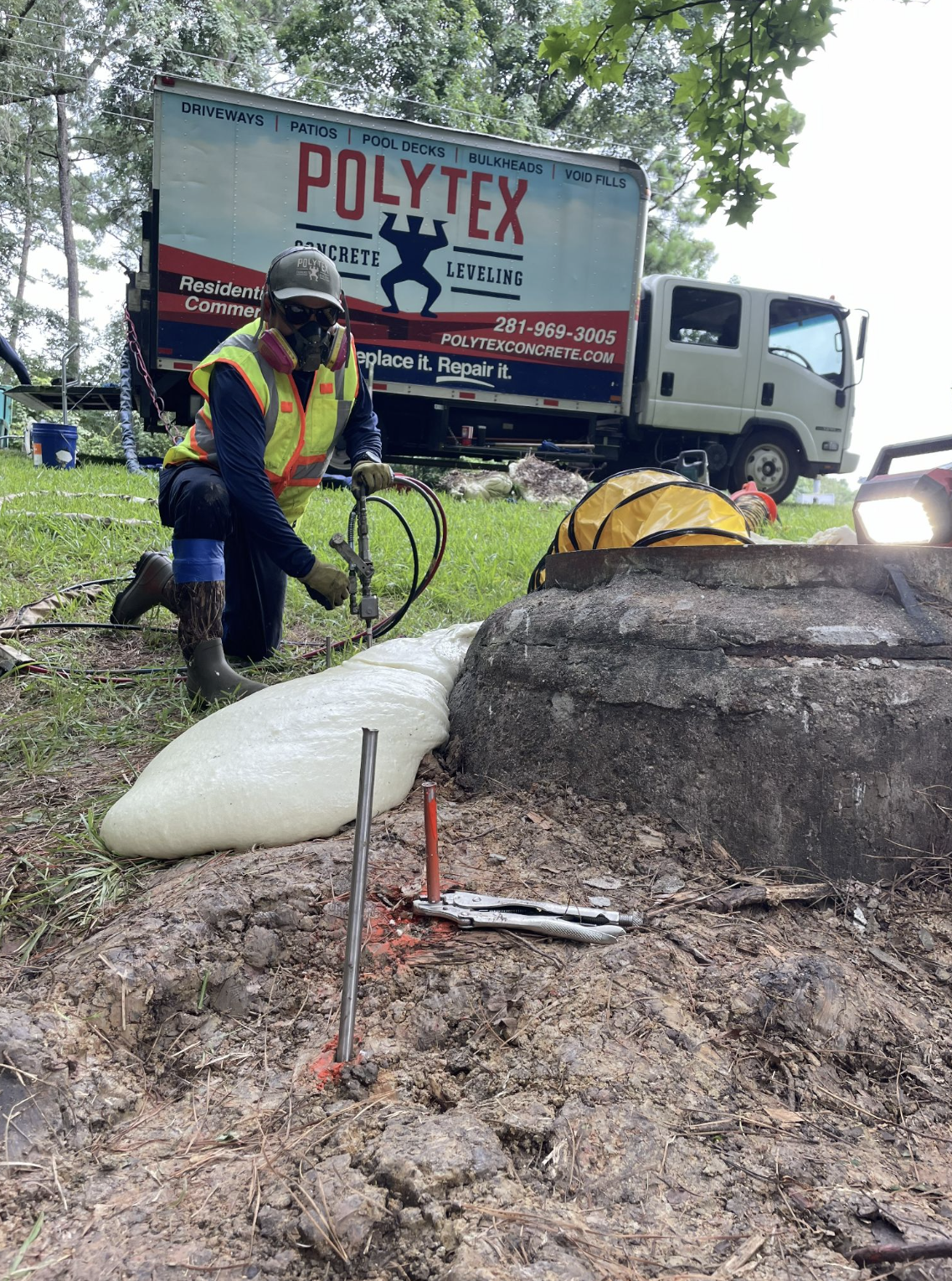
The polyurethane used for concrete leveling is very different from household spray foam insulation. It is engineered specifically for structural applications. Once injected beneath a slab, the material expands into underground voids, compacts loose soils, and cures into a rigid, lightweight support system capable of carrying significant loads.
Unlike loose fill materials, it doesn’t rely on gravity to fill empty spaces. It actively expands into irregular voids and helps restore continuous support beneath the concrete.
Because of these characteristics, polyurethane has become a preferred repair method for:
- Residential driveways
- Sidewalks
- Patios
- Pool decks
- Garage floors
- Parking lots
- Warehouse floors
- Loading docks
- Airport pavements
- Municipal infrastructure
Its widespread use across these applications demonstrates confidence in its long-term structural performance.
The Real Question Isn’t About the Foam
Many people ask how long the foam lasts. A better question is, will the conditions that caused the settlement continue? Imagine repairing a roof leak without replacing the damaged flashing. The patch might be excellent, but water will eventually find its way back inside. Concrete settlement works the same way.
If drainage problems continue directing water beneath a slab, or if erosion remains unchecked elsewhere on the property, new settlement can eventually occur in different locations. That doesn’t mean the original repair failed, it means the property continues experiencing the same underlying forces that caused the initial problem. This is why PolyTex evaluates more than the visible symptom. Understanding why the soil moved is just as important as restoring support beneath the slab.
Drainage Has a Major Impact on Longevity
Water is one of the biggest factors affecting soil stability throughout Southeast Texas. Heavy rainfall, poor grading, overflowing gutters, leaking irrigation systems, and improperly placed downspouts can all introduce excessive moisture beneath concrete.
Over time, this repeated saturation may:
- Wash away fine soil particles.
- Create new underground voids.
- Soften supporting soils.
- Increase hydrostatic pressure.
- Encourage future settlement.
Correcting drainage issues whenever possible helps maximize the lifespan of any concrete repair. It’s one reason PolyTex looks at the entire site instead of focusing only on the slab itself.
Houston’s Soil Never Stops Moving
One of the unique challenges of working in Houston and the Gulf Coast is expansive clay soil. Unlike stable rock formations found in other parts of the country, expansive clay responds continuously to changes in moisture. During wet periods, it absorbs water and expands, but during dry periods, it contracts. These seasonal cycles occur year after year.
A properly stabilized slab can perform exceptionally well within this environment, but understanding local soil behavior remains essential. Repair strategies that work in one region may not be appropriate in Southeast Texas.
Why Lightweight Materials Matter
Traditional cement-based fill materials add significant weight beneath the slab. That additional weight can place more stress on already weak soils. Polyurethane foam provides structural support while remaining remarkably lightweight. This reduces additional loading on unstable subgrades and allows the repaired area to perform more efficiently. For moisture-sensitive soils common throughout Houston, this lightweight characteristic offers an important long-term advantage.
Proper Installation Matters
Even the best material depends on proper installation.
Successful polyurethane concrete leveling requires technicians who understand:
- Soil behavior
- Underground water movement
- Void formation
- Expansion characteristics
- Slab response
- Elevation control
Every property is different. Injection locations, material volume, and lifting strategy must be adjusted based on site conditions rather than following a generic process. Experience plays a major role in producing durable results.
Commercial Properties Have Different Performance Expectations
Residential driveways experience very different loading conditions than warehouse floors or airport taxiways.
Commercial projects often support:
- Heavy delivery trucks
- Forklifts
- Industrial equipment
- Constant vehicle traffic
- High pedestrian volumes
Polyurethane foam is frequently selected for these demanding environments because it provides structural support while minimizing operational downtime. Many facilities can resume normal operations shortly after repairs are completed.
Maintenance Still Matters
Although polyurethane itself requires virtually no maintenance, property owners should continue protecting their investment.
Simple maintenance practices include:
- Keeping gutters clean.
- Extending downspouts away from slabs.
- Repairing irrigation leaks.
- Maintaining positive drainage.
- Monitoring areas where water frequently collects.
- Addressing small settlement issues before they become larger problems.
These practices help preserve soil stability and reduce future erosion.
Warning Signs That Shouldn’t Be Ignored
Even after repairs, property owners should remain aware of changing site conditions.
Watch for:
- New standing water
- Fresh cracks
- Soil washing out after storms
- Gaps beneath concrete edges
- Uneven slab movement in nearby areas
Early evaluation allows small concerns to be addressed before they develop into more significant repairs.
A Long-Term Investment in Your Property
When performed correctly, polyurethane concrete leveling is designed to provide long-term support beneath existing concrete. More importantly, it addresses the cause of settlement rather than simply replacing the visible symptom. For many homeowners and commercial property owners, preserving existing concrete while restoring the supporting soil provides exceptional long-term value.
Instead of tearing out usable concrete, stabilization allows the existing structure to continue serving its intended purpose with renewed support beneath it.
Final Thoughts
Polyurethane concrete leveling has earned its reputation because it combines modern materials with proven engineering principles. By filling underground voids, stabilizing weakened soils, and restoring support beneath existing slabs, it offers a durable solution for many types of concrete settlement. While no repair exists in complete isolation from the surrounding environment, addressing drainage, understanding soil conditions, and correcting the underlying cause of settlement significantly improve long-term performance.
PolyTex Concrete helps homeowners, businesses, engineers, and municipalities throughout Houston, Galveston, Conroe, The Woodlands, and surrounding Southeast Texas protect their investments through advanced polyurethane concrete leveling and soil stabilization solutions.
If your property has begun showing signs of settlement, schedule a free evaluation with PolyTex Concrete to determine whether polyurethane stabilization is the right long-term solution.