
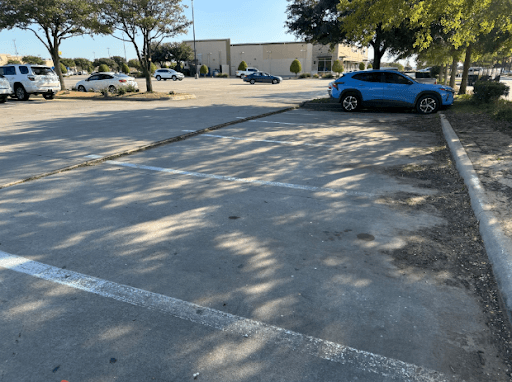
Concrete settlement around a commercial property rarely begins as a dramatic failure. More often, it starts with something small like a sidewalk panel that sits slightly lower than the one beside it, water collecting near an entrance after a storm, a loading area that feels rougher under a forklift, or a gap appearing beneath the edge of a slab. Those changes are easy to classify as normal wear, especially at busy properties where maintenance teams are constantly prioritizing repairs. But when concrete begins changing elevation, the visible surface may be telling you something important about the soil underneath it.
Throughout Houston and Southeast Texas, commercial properties contend with expansive clay soils, heavy rainfall, concentrated stormwater runoff, underground utilities, disturbed fill, and significant vehicle and equipment loads. Any combination of these conditions can contribute to soil movement, erosion, or hidden void formation beneath concrete. For property owners and facility managers, recognizing the early signs of settlement can provide an opportunity to investigate the problem before a relatively small area becomes a larger maintenance or operational issue.
Why Does Concrete Around Commercial Buildings Settle?
Concrete depends on consistent support from the soil and base materials beneath it. When those supporting materials remain stable, a properly designed slab can handle substantial loads. When support changes beneath one area, however, the concrete above may begin moving independently from the surrounding slabs.
The cause of this may be poor compaction during original construction, soil consolidation over time, erosion caused by moving water, leaking underground utilities, or repeated expansion and contraction of moisture-sensitive soils. Commercial properties can be particularly vulnerable because large buildings, roofs, parking areas, and truck courts collect and redirect tremendous amounts of stormwater.
The concrete may be where the problem becomes visible, but the concrete itself is not always what caused the movement.
Houston’s Soil and Rainfall Create Challenging Conditions
Commercial properties in the Houston region face an unusual combination of soil and water conditions. Expansive clay can change volume as moisture levels fluctuate, while intense rainfall can rapidly saturate soils and move large quantities of water through a property. These conditions are amplified on commercial sites because so much of the ground is covered by impermeable surfaces. Rain falling on a large warehouse roof or parking lot cannot soak evenly into the soil. Instead, drainage systems collect and concentrate that water into specific locations.
When drainage is working correctly, that is exactly what should happen. When a drain fails, a pipe leaks, grading changes, or water finds an unintended underground pathway, concentrated runoff can begin affecting the supporting soils beneath nearby concrete. Over time, fine soil particles can migrate away and hidden voids can develop.
Sidewalk Settlement Is Often One of the First Visible Signs
Sidewalks around commercial buildings can provide an early indication that soil conditions are changing. An uneven sidewalk panel may result from localized settlement beneath the slab. Property managers might also notice a growing gap along the building, soil disappearing beneath a sidewalk edge, or a section that begins holding water.
Because sidewalks are relatively narrow, even modest soil movement can produce noticeable elevation differences between neighboring panels. These changes deserve attention, particularly around entrances, high-traffic pedestrian areas, ADA routes, and connections between parking areas and buildings.
A surface repair may improve appearance, but if the slab lost support because soil disappeared underneath it, the underlying condition should also be evaluated.
Watch the Concrete Around Building Entrances
Entrances are another important area because they combine pedestrian traffic, drainage, architectural transitions, and often several different concrete placements. Settlement near an entrance can affect how water drains away from the building and create uneven transitions between exterior sidewalks, ramps, landings, and interior floors.
If an area that previously drained properly begins collecting water near the door, do not assume the drainage system is solely responsible. The elevation of the concrete itself may have changed. That distinction matters. A drain cannot correct a slab that has physically settled below its intended elevation, just as leveling a slab will not repair a failed drainage system. The right repair begins with identifying which condition changed.
Loading Docks and Service Areas Experience Different Loads
Concrete around loading docks and service areas is subjected to far more demanding conditions than a typical sidewalk. Trucks, trailers, forklifts, pallet jacks, dumpsters, and other equipment can create substantial repeated loads. Heavy traffic does not necessarily cause soil erosion, but it can reveal a support problem that already exists.
If a void develops beneath a loading area, the slab may temporarily bridge across the unsupported space. Every vehicle or equipment load then places additional stress on concrete that is no longer uniformly supported. Facility managers may first hear about the problem from employees. Forklift operators often notice a changing bump or depression long before it becomes obvious during a routine property inspection. Those observations are worth taking seriously.
Parking Areas Can Hide Underground Problems
Parking lots and commercial drive lanes cover large areas, which means the first visible sign of settlement may seem isolated from the underlying cause. A depression may develop near a storm drain. Pavement may repeatedly crack in the same location. Concrete approaches may begin separating from adjacent surfaces, or a low area may suddenly start holding water after storms. In some cases, the problem may involve drainage infrastructure beneath the surface. Water escaping from a damaged pipe or moving through disturbed utility trenches can remove supporting soil without creating an obvious surface opening. Repeatedly repairing the pavement without investigating why it continues moving can result in treating the symptom rather than the cause.
Utility Trenches Deserve Special Attention
Commercial properties contain extensive underground infrastructure. Water lines, sewer lines, electrical conduit, communications, stormwater systems, and other utilities may all travel beneath or beside concrete. Installing those systems requires excavation, followed by backfilling and compaction. If the replacement material settles over time, a weak zone can develop along the original trench. Water can also follow these disturbed areas because they may provide an easier pathway than surrounding undisturbed soil. When settlement follows a relatively straight path or repeatedly appears above known utility routes, the history of underground construction may provide an important clue.
Standing Water May Be a Symptom, Not Just a Cause
Water and concrete settlement often create a cycle. Poor drainage can contribute to soil erosion beneath a slab, causing the concrete to settle. Once the concrete settles, the new low area begins collecting even more water. That water can then reach cracks, joints, or slab edges and contribute to additional soil movement. For facility managers, this means new standing water deserves investigation even when drains appear to be functioning. Ask whether the drainage changed or whether the surface elevation changed. If water suddenly collects in a location that remained dry for years, something about the site is different.
Look for Soil Disappearing Along Slab Edges
Visible soil loss is one of the clearest indications that support conditions may be changing. If you can see beneath the edge of a sidewalk, loading area, concrete pad, or other slab, the opening may extend farther underneath the concrete than it appears from the outside. Concrete can bridge across a void, which means the surface may remain intact while unsupported space grows below it. Adding soil along the exposed edge can improve appearance, but loose material placed from the surface may not reach a deeper void. If water is actively carrying soil away, the replacement material may simply disappear again. Recurring washout deserves investigation.
Cracks Tell You Something Moved, But Not Necessarily Why
Commercial concrete cracks for many reasons, and not every crack indicates a serious settlement problem. Concrete shrinks, expands, experiences temperature changes, and responds to loads throughout its service life. What facility managers should watch for is change. A crack that remains essentially identical for years tells a different story from one that continues widening or develops an elevation difference between its two sides. Recurring repairs are another clue. If the same crack is patched repeatedly and continues returning, movement beneath the slab may still be occurring. The objective should be to understand the movement rather than simply hide the evidence of it.
Hidden Voids Can Exist Beneath Apparently Good Concrete
One of the most important concepts for commercial property owners is that a slab does not have to be visibly sinking for support to be missing beneath it. Concrete has enough strength to bridge across relatively small unsupported areas. That means erosion or soil consolidation can create underground voids before significant surface settlement becomes visible. This is particularly important in areas carrying vehicles, equipment, or stored materials. A slab that appears intact may not be receiving uniform support from below. Known soil washout, recurring drainage problems, unexplained hollow areas, or nearby settlement can justify investigating whether support has been compromised beneath otherwise usable concrete.
When Is Polyurethane Concrete Leveling Appropriate?
When the existing slab remains suitable for repair and the primary problem is lost support beneath it, polyurethane injection can provide an alternative to removing and replacing the concrete. PolyTex Concrete uses structural polyurethane materials injected through relatively small access points in the slab. As the material reacts and expands, it fills available underground voids and helps restore contact between the concrete and supporting ground. Depending on project conditions, polyurethane injection can be used to fill hidden voids, stabilize loose or compromised soils, restore support beneath slabs, and carefully raise settled concrete when leveling is appropriate. The objective is not simply to make a low spot look better. It is to address the support conditions beneath the concrete that allowed the movement to occur.
Why Reduced Disruption Matters on Commercial Properties
Concrete replacement can be particularly disruptive at an active business. Demolition may require closing sidewalks, entrances, loading areas, parking spaces, or portions of an operating facility. The old concrete must be removed, the base prepared, replacement concrete placed, and adequate curing time allowed before normal use resumes. There are situations where replacement is absolutely the correct solution. Severely deteriorated, extensively fractured, improperly designed, or otherwise unsuitable concrete may not be a good candidate for leveling.
When the slab itself remains serviceable, however, polyurethane injection can often provide a much less invasive approach. Targeted repairs can help reduce demolition, debris, downtime, and disruption to employees, customers, tenants, and operations.
Soil Stabilization May Be More Important Than Lifting
Not every PolyTex commercial project needs to involve raising concrete. Sometimes the surface remains at an acceptable elevation, but investigation identifies an underground void or compromised soil beneath it. In those situations, restoring support may be the primary objective.
Void filling and soil stabilization can be particularly valuable when a problem is identified before the concrete experiences significant settlement or cracking. This distinction is important because concrete leveling and soil stabilization are related services, but they are not exactly the same thing. A slab does not have to visibly sink before lost support becomes worth addressing.
Correct the Source of the Problem Too
Polyurethane can restore support where soil has been lost, but it does not eliminate every condition that may have caused the soil loss. If a broken stormwater line is releasing water beneath a parking lot, the pipe still needs to be repaired. If roof drainage is overwhelming one area, that drainage condition needs attention. If a leaking utility is contributing to erosion, the leak must be corrected.
Commercial stabilization projects may require coordination among PolyTex, facility maintenance teams, drainage contractors, plumbers, engineers, general contractors, or other specialists. A strong repair strategy addresses both the damage beneath the concrete and the condition responsible for creating it.
Build Concrete Settlement Into Routine Property Inspections
Facility managers already inspect roofs, mechanical systems, fire protection equipment, drainage systems, parking areas, and building envelopes. Concrete movement deserves a place on that list. During routine property walks, look for changes in sidewalk elevations, recurring cracks, new standing water, soil washout, depressions near drainage structures, settlement around loading areas, and gaps beneath slab edges. After major storms, inspect areas where large volumes of water move through the property. Conditions that look normal during dry weather can become much easier to understand when you see how water actually travels across the site. Photographs are also useful. A simple visual record can help determine whether a suspicious area is stable or continuing to change.
When Should You Call PolyTex?
You do not need to wait until concrete becomes unusable before requesting an evaluation. Consider having an area evaluated when settlement appears to be progressing, employees report changing floor or pavement conditions, the same repair repeatedly fails, soil is visibly disappearing, standing water develops in a new location, or concrete near drainage infrastructure begins moving.
Early evaluation provides information. It can help determine whether the problem is primarily surface deterioration, lost support beneath the slab, an active drainage issue, or a condition requiring additional professional evaluation. Understanding the cause gives property managers better options for planning the appropriate repair around budgets and operations.
Final Thoughts
Concrete settlement around a commercial building is rarely just about the appearance of the slab. Sidewalks, entrances, loading docks, parking areas, utility corridors, and other concrete surfaces depend on stable support beneath them. Throughout Houston and Southeast Texas, heavy rainfall, expansive clay, underground utilities, drainage problems, soil erosion, and poorly compacted fill can all change those support conditions over time.
PolyTex Concrete provides commercial concrete leveling, polyurethane injection, void filling, and soil stabilization for warehouses, retail properties, industrial facilities, multifamily properties, commercial developments, and other facilities throughout Houston, Conroe, The Woodlands, Galveston, and surrounding Southeast Texas communities.
If your property is developing uneven concrete, recurring cracks, unexplained standing water, soil washout, or other signs of settlement, schedule an evaluation with PolyTex Concrete. Finding out what is happening beneath the slab can help you address the problem before it becomes a larger operational or maintenance issue.