
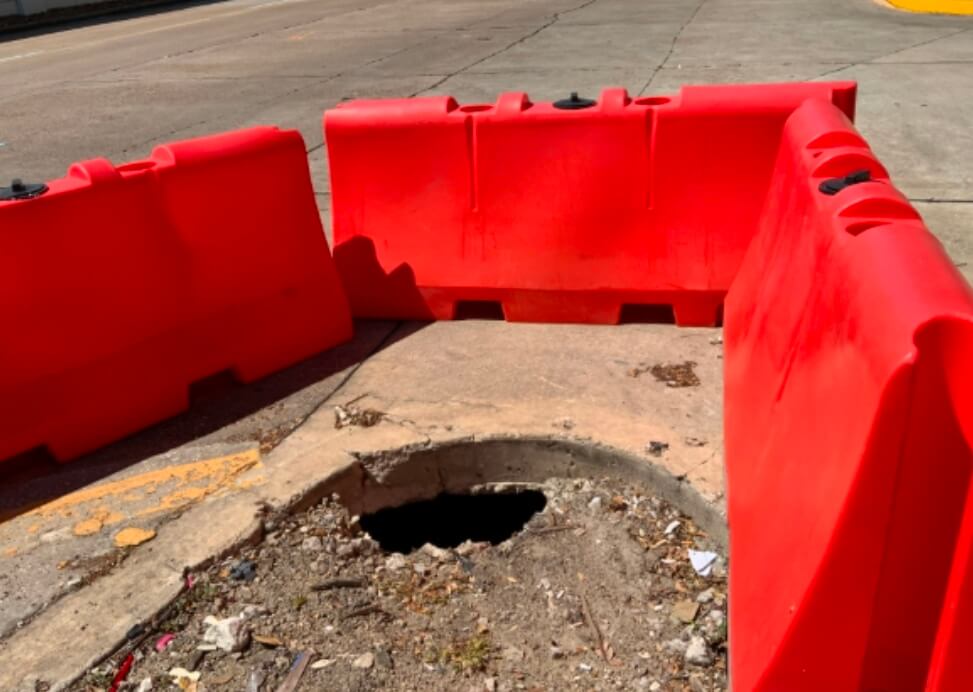
Soil erosion can create serious problems long before property owners see obvious damage at the surface. Water moves through the ground, carries soil particles away, and gradually creates weakened areas beneath concrete, around culvert pipes, behind bulkheads, or alongside other structures. By the time a slab settles or a visible void appears, the erosion process may have been occurring for months or even years.
Polyurethane injection can be an extremely effective tool for repairing the damage caused by that soil loss. It can fill underground voids, restore support beneath concrete, and help stabilize loose or compromised soils without requiring extensive excavation.
But there is an important distinction property owners need to understand: polyurethane injection can stabilize soil affected by erosion, but it does not automatically eliminate whatever caused the erosion in the first place. If stormwater, a failed drainage system, a leaking pipe, or another source continues moving water through the area, that condition also needs to be addressed.
Understanding the difference between stopping the source of erosion and repairing the damage erosion has caused is essential to developing an effective long-term solution.
What Actually Happens When Soil Erodes?
Soil beneath concrete and infrastructure is not a single solid mass. It consists of particles of different sizes, along with air and moisture occupying spaces between them. When water moves through soil with enough force, it can begin carrying some of those particles with it. Fine materials are often the first to migrate. As that process continues, the soil can become less dense and less capable of supporting the structure above it. Eventually, small spaces can develop underground. Continued water movement may enlarge those spaces until they become significant voids.
The surface does not necessarily collapse immediately. Concrete slabs, pavement, and other structures can sometimes bridge across unsupported areas for a period of time. That means significant soil loss may exist beneath the surface before the first visible signs appear. Once the remaining support is no longer sufficient, settlement can begin.
Where Does This Type of Soil Loss Occur?
Erosion-related voids can develop in many different environments. PolyTex works with residential, commercial, waterfront, and infrastructure applications where water movement has compromised the soil supporting or surrounding a structure.
Common examples include:
- Beneath driveways and sidewalks
- Under patios and pool decks
- Beneath warehouse and commercial floors
- Under parking lots and loading docks
- Around culvert pipes
- Near storm drains and drainage structures
- Behind bulkheads and seawalls
- Around utility trenches
- Beneath concrete near drainage paths
- Around municipal infrastructure
The scale and cause may be different, but the underlying problem is similar: material that once provided support is no longer where it needs to be.
What Does Polyurethane Injection Actually Do?
Polyurethane injection allows PolyTex to introduce specialized material directly into compromised areas beneath or around a structure. Depending on the application and material being used, polyurethane can expand into underground voids and penetrate areas of loose soil. The objective is to restore support and improve the conditions in the affected zone without excavating everything above it.
For suitable projects, polyurethane injection may be used to:
- Fill underground voids
- Restore support beneath concrete
- Stabilize loose or compromised soils
- Reduce further soil migration through treated areas
- Fill spaces around infrastructure
- Carefully lift settled concrete when appropriate
- Reach difficult areas without major excavation
This makes polyurethane particularly useful when the problem is underground but the surface above it remains worth preserving.
So Does Polyurethane Stop Soil Erosion?
This is where terminology matters. Polyurethane can help stabilize soil and fill the pathways or voids created by erosion, but saying that injection alone permanently “stops erosion” in every situation would oversimplify the problem.
Consider a broken drainage pipe releasing water beneath a parking lot. Polyurethane may be able to stabilize the soil and fill the void created by that water, but if the pipe continues leaking, the source of the problem still exists. The same principle applies to a downspout repeatedly dumping stormwater beside a residential slab, uncontrolled runoff flowing around a culvert, or water finding a pathway behind a bulkhead.
The best repair strategy asks two separate questions:
- What caused the soil to disappear?
- How do we restore the support that was lost?
Polyurethane injection can be an excellent answer to the second question, but the first may require drainage correction, plumbing repair, erosion control, or other work depending on the site.
Why Filling the Void Matters
Once soil has been lost, stopping the water source does not automatically restore the missing material. Imagine discovering that runoff has created a substantial void beneath a driveway. Redirecting the runoff may prevent additional erosion, but the empty space beneath the concrete still exists. The slab remains unsupported.
This is where void filling becomes important. Polyurethane can be injected into the affected area to occupy the underground space and restore contact beneath the concrete. In many projects, the complete solution involves both correcting the cause of the erosion and stabilizing the damage it left behind.
Polyurethane Can Reach Areas That Are Difficult to Excavate
One of the biggest advantages of injection technology is access. Traditional soil repair may require excavation to physically reach the affected area. That can become difficult when the void is beneath a building floor, driveway, loading dock, parking lot, pool deck, or other finished surface.
Excavation around infrastructure can also create additional disruption. Concrete may need to be demolished, landscaping removed, traffic rerouted, equipment relocated, or operations interrupted. Polyurethane injection can reach many underground areas through relatively small access points. That allows PolyTex to address voids and unstable soils while preserving much more of the property above them.
Soil Stabilization Beneath Residential Concrete
Residential settlement provides a straightforward example of how the process works. A homeowner may notice a sidewalk, patio, driveway, or pool deck beginning to sink. Investigation may reveal that water has been moving beneath the concrete and carrying soil away. If the slab remains suitable for repair, polyurethane can be injected beneath it to fill the void and restore support. Controlled injection may also allow the concrete to be raised toward its original elevation. However, if a downspout, drainage issue, or irrigation leak caused the erosion, that source should also be corrected.
The goal is not simply to lift the concrete. It is to create a more complete repair strategy.
Commercial Properties Can Develop Much Larger Voids
Commercial sites introduce additional challenges because of their size and drainage systems. Large roofs, parking lots, truck courts, and other impervious surfaces can concentrate tremendous amounts of stormwater. Drainage infrastructure is responsible for moving that water safely away from buildings and pavement.
When something fails, significant soil loss can occur. Warehouse floors, loading docks, parking areas, sidewalks, and other commercial slabs may remain intact while voids develop beneath them. Heavy vehicle and equipment loads can then expose those weakened areas.
Polyurethane injection allows PolyTex to stabilize suitable commercial concrete without automatically resorting to large-scale demolition and replacement.
Culvert Pipes Are Especially Vulnerable to Soil Loss
Culverts create another important application for soil stabilization. Water is intentionally moving through these systems, often at substantial volume and velocity. If soil begins migrating around the outside of the pipe, voids can develop around the culvert and beneath the pavement or structures above it. Property owners may notice depressions, pavement settlement, sinkholes, visible soil loss, or water moving where it should not.
In appropriate applications, polyurethane can help fill voids and stabilize soils around culvert structures. However, the condition of the pipe, joints, drainage design, water pathway, and surrounding infrastructure must also be considered. Simply filling a void without understanding why material is disappearing would be an incomplete approach.
Bulkheads and Waterfront Properties Present a Similar Challenge
Bulkheads and seawalls are designed to separate land from water, which means soil retention is fundamental to their purpose. When openings develop or water begins carrying soil through or around the structure, voids can form behind the wall. The surface above may settle, concrete can crack, and depressions may develop along the waterfront.
Polyurethane injection can be used in appropriate conditions to fill voids and stabilize compromised soils behind these structures without requiring excavation of the entire affected area.
As with culverts, though, the condition of the structure itself matters. PolyTex can address appropriate soil stabilization and void-filling needs, while structural concerns may require evaluation by an engineer or other qualified professional.
Why Polyurethane’s Lightweight Nature Matters
When stabilizing weak soil, adding significant additional weight is not always desirable. Polyurethane materials used for these applications can provide substantial support without introducing the same mass that might come from filling an underground space with heavier materials.
This can be advantageous when the existing soil has already demonstrated that it has limited supporting capacity.
The exact material and injection strategy depend on the project, but the ability to fill voids without placing unnecessary additional load on weak soils is one reason polyurethane technology is valuable in stabilization work.
Can Polyurethane Be Used Before Concrete Sinks?
In some situations, yes. A visible void or known loss of support may be identified before significant surface settlement occurs.
Concrete can sometimes bridge across unsupported areas, meaning the slab above may still appear relatively level even though soil has disappeared beneath it. If the void can be identified and the slab remains suitable, stabilizing the area before major movement occurs may help preserve the existing concrete. This is why property owners should not ignore visible soil washout simply because the surface still looks good.
A void is easier to address before the slab above it has broken extensively.
Signs You May Have Soil Erosion or Underground Voids
Some warning signs are obvious, while others are subtle. Property owners and facility managers should watch for:
- Soil disappearing beneath slab edges
- Depressions developing in the ground
- New cracks or settlement in concrete
- Standing water in locations that previously drained
- Recurring pavement repairs
- Hollow-sounding areas beneath concrete
- Settlement near culverts or drainage structures
- Depressions behind bulkheads
- Water emerging from unexpected locations
- Sinkhole-like areas or sudden surface changes
These symptoms do not all have the same cause, but they justify investigating what is happening underground.
Why Surface Repairs Often Fail When the Problem Is Underground
Patching a crack, adding soil along a slab edge, or repairing the visible surface may improve appearance without correcting the underlying problem. If a void remains beneath the concrete, the slab may continue moving. If water continues carrying soil away, additional voids may develop nearby.
Recurring repairs are often a clue that the problem is being treated at the wrong level. Instead of asking only how to repair the surface, property owners should ask whether the support beneath that surface has changed.
The Best Soil Stabilization Projects Start With the Cause
Polyurethane is a powerful repair technology, but the material itself is only part of a successful project.
A good evaluation should consider where water is coming from, where it is traveling, where soil has been lost, what structures are affected, and whether the source of the erosion is still active. Depending on the site, the complete solution may involve coordination with drainage contractors, plumbers, engineers, municipalities, property maintenance teams, or other specialists.
PolyTex’s role is to identify where polyurethane injection, void filling, concrete leveling, and soil stabilization can appropriately restore lost support. That approach produces a better repair than simply injecting material wherever a low spot appears.
Repair the Damage and Address the Cause
The distinction between erosion control and soil stabilization is important. If water is actively washing soil away, the water problem needs attention. If that process has already created underground voids, those voids may also need to be repaired.
One does not automatically accomplish the other. For many properties, the strongest solution is a combination: control or correct the source of damaging water movement, then stabilize the areas where support has already been lost. That principle applies whether the project involves a residential patio, commercial parking lot, warehouse floor, culvert, bulkhead, or municipal structure.
Final Thoughts
Polyurethane injection can be an extremely effective solution for repairing the underground damage caused by soil erosion. It can fill hidden voids, stabilize compromised soils, restore support beneath concrete, and reach difficult areas without extensive excavation.
It should not be presented as a substitute for identifying why the erosion occurred. Heavy rainfall, failed drainage, leaking pipes, culvert problems, waterfront conditions, and uncontrolled runoff can all continue affecting soil if the source remains unresolved.
PolyTex Concrete provides polyurethane injection, void filling, concrete leveling, and soil stabilization solutions throughout Houston, Conroe, The Woodlands, Galveston, and surrounding Southeast Texas communities. PolyTex works with homeowners, commercial property owners, facility managers, contractors, engineers, municipalities, and waterfront property owners to address problems where soil loss has compromised the support beneath concrete and infrastructure.
If you are seeing settlement, visible soil loss, unexplained depressions, or signs of underground voids, schedule a free evaluation with PolyTex Concrete. Understanding where the soil went and why it disappeared is the first step toward determining how to stabilize the area.