
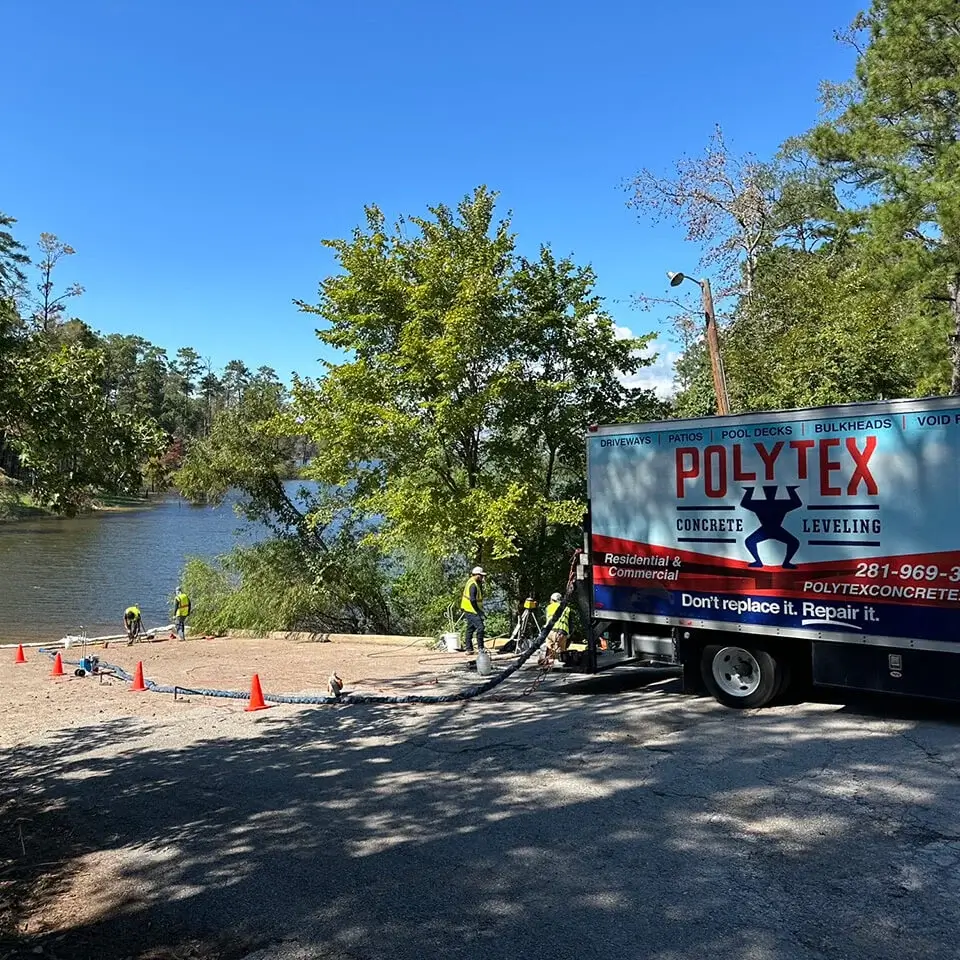
What to Expect During a Foam Injection Concrete Repair
Understanding the Foam Injection Process
If you’ve noticed sinking driveways, uneven sidewalks, or dipping pool decks, polyurethane foam injection might be the perfect fix. The technique restores concrete surfaces by injecting lightweight expanding foam beneath the slab, lifting it back to grade and stabilizing the soil below.
Unlike traditional mudjacking, foam injection is non-invasive, fast, and long-lasting. Here’s what you can expect every step of the way when you schedule a project with PolyTex Concrete.
Step 1: Initial Inspection and Estimate
Every job starts with a free, on-site evaluation. A PolyTex technician will:
● Measure the amount of settlement and map low points.
● Check for cracks, drainage patterns, and nearby structures.
● Evaluate soil type and moisture conditions.
They’ll explain whether your slab is a good candidate for foam injection or if another repair method is needed. You’ll receive a transparent quote outlining material, labor, and projected lift height without any surprise fees.
Average visit time: about 30 minutes.
Step 2: Site Preparation
Once you approve the estimate, the crew prepares the area:
● Cleans the concrete surface of dirt, debris, and loose material.
● Marks injection points (usually about the size of a penny).
● Protects landscaping and nearby structures.
There’s no need to remove plants, fences, or concrete sections. Most driveways or patios remain fully intact.
Step 3: Drilling Small Access Holes
Technicians drill precise holes where foam will be injected. The number of holes depends on slab size and settlement pattern, usually 1 hole per 5 feet.
These holes are strategically placed to ensure even lift and minimal patch visibility.
Step 4: Foam Injection and Lifting
Now for the fun part. The two-part polyurethane mixture is injected beneath the slab, where it instantly reacts and expands. The expanding foam fills every void, compacting loose soil and gently pushing the slab upward.
Technicians monitor lift in real-time using specialized gauges to ensure even elevation and prevent over-correction. The process is precise to within fractions of an inch.
Average lifting time: 20 to 40 minutes per section.
Step 5: Finishing and Curing
Polyurethane cures quickly, within 10 to 15 minutes, and the small injection holes are patched with color-matched grout. You can usually walk or drive on the surface the same day.
Because the foam is closed-cell and waterproof, it won’t absorb moisture or degrade over time, a critical advantage in the humid Gulf Coast climate.
Step 6: Clean-Up and Final Inspection
PolyTex crews leave every site spotless and with minimal impact to the property. Our crews:
● Verify the lift meets project specs.
● Check for consistent alignment with adjacent slabs.
● Review results with you before leaving.
● Clean up after ourselves and restore your property the same or better than we found it
Typical Applications
Foam injection works on almost any concrete surface:
● Driveways and sidewalks
● Garage floors
● Pool decks and patios
● Warehouse or shop slabs
● Foundation edges
● Bulkheads and seawalls
If you’re in Houston, The Woodlands, Conroe, or Montgomery, or the surrounding areas, local soil movement makes these areas ideal candidates for foam leveling.
Before and After: What to Expect Visually
Before: cracks, pooling water, uneven expansion joints, and a visible slope toward the street or garage. After: clean, sealed joints, flat surfaces, and restored curb appeal, all achieved without replacing a single section of concrete.
Most homeowners are shocked at how seamless the repair looks once patched and cleaned.
Frequently Asked Questions
How long does foam injection last?
Properly installed foam lasts for decades. It doesn’t break down, shift, or wash away like traditional fill materials.
Will it raise all sections evenly?
Yes. PolyTex technicians use precision equipment to measure the lift at multiple points, ensuring an even elevation across the slab.
Is there a warranty?
PolyTex Concrete offers warranty coverage on workmanship and material stability, protecting your investment.
Can foam injection be done in the rain?
Light rain is fine, but for best results the ground should be relatively dry to ensure full adhesion and lift accuracy.
Common Mistakes to Avoid Before the Project
1. DIY repairs or over-sealing cracks – traps moisture and worsens sinking.
2. Delaying repairs – allows water to erode more soil under the slab.
3. Ignoring drainage issues – fix downspouts or grading while leveling to prevent future movement.
Why Foam Injection Is Worth The Investment
Foam injection isn’t just a quick fix, it’s a permanent stabilization solution that restores your concrete and protects your property value.
Compared to replacement, you’ll:
● On average, you’ll save 30–50% on cost
● Avoid demolition mess and construction setbacks
● Extend the lifespan of existing concrete
● Prevent water damage to surrounding structures
● Prevent hazards in walkways that could lead to injuries and possible legal action
So, if your concrete is uneven, don’t wait for it to crack further. Contact PolyTex Concrete Leveling today for a free on-site inspection.
Call us today at 281-969.3005