

Why Engineers & General Contractors Need Trusted Repair Partners
Engineers and General Contractors are often the first professionals to identify structural risks in culverts, bulkheads, concrete slabs and shoreline systems. Whether during inspections, design reviews, or failure assessments, engineers & GC’s play a critical role in determining when infrastructure needs repair. The challenge is not identifying the problem, but rather in finding a contractor who can execute the repair exactly as intended, without introducing new risks, delays, or design conflicts.
PolyTex Concrete works as a trusted field partner for engineers and GC’s across the Houston area by providing targeted stabilization solutions for culverts, slabs, foundations and bulkheads that align with engineering intent, site constraints, and long-term performance goals.
Common Engineering Challenges in Culvert and Bulkhead Repairs
Culvert and bulkhead systems fail for reasons that are often predictable from an engineering standpoint.
Typical issues include:
-
Soil loss and void formation around culvert pipes
-
Hydrostatic pressure behind bulkheads
-
Inadequate backfill compaction
-
Aging materials and joint separation
-
Erosion caused by storm water and wave action
While full replacement is sometimes required, many structures remain structurally sound but lack adequate soil support. This is where PolyTex Concrete’s stabilization and void filling solutions become critical.
Why Excavation Is Not Always the Best Solution
Traditional repair approaches often default to excavation, removal, and replacement of the original structures. While effective, these methods can be disruptive, costly, and unnecessary when the underlying structure is still viable. Excavation-based repairs frequently introduce new issues such as:
-
Increased safety risks
-
Extended road or access closures
-
Environmental disturbance
-
Higher project costs to both the contractors and the customers
-
Complications near utilities or waterlines
As problem solvers, Engineers increasingly seek solutions that stabilize existing infrastructure while minimizing disturbance to surrounding systems.
PolyTex Concrete’s Role in Engineering-Driven Repairs
PolyTex Concrete specializes in polyurethane foam injection for soil stabilization and void filling around culverts and bulkheads. This method allows engineers to address loss of support without altering the original structure or alignment.
PolyTex Concrete works from engineering assessments and recommendations to:
-
Fill voids created by erosion
-
Recompact loose soil surrounding pipes and walls
-
Reduce hydrostatic pressure zones
-
Restore structural support without excavation
This approach supports engineering intent while reducing construction impact.
How Foam Injection Supports Engineering Objectives
From an engineering perspective, polyurethane foam injection offers several advantages over other methods such as mudjacking. These advantages include:
Precision Application
Foam can be injected at specific depths and locations, allowing engineers to target voids without disturbing stable areas.
Load-Bearing Support
Once cured, the foam creates a stable support matrix that distributes loads evenly and reduces differential settlement.
Water Resistance
Closed-cell foam is hydrophobic, preventing future washout and maintaining performance in saturated conditions. This ensures quality fixes with minimal warranty work.
Minimal Structural Impact
Injection requires small access points and does not introduce heavy loads that could worsen soil instability.
Culvert Repair Engineers Commonly Refer
PolyTex frequently supports culvert repair projects involving:
-
Voids around corrugated metal or concrete pipes
-
Settlement beneath roadway culverts
-
Soil loss at culvert inlets and outlets
-
Erosion under access roads and driveways
-
Storm water infrastructure repairs
In many cases, foam injection restores soil support without requiring pipe replacement, preserving both budget and schedule.
Bulkhead and Shoreline Repair Support
Bulkheads are subject to constant stress from water movement, soil pressure, and aging materials. Engineers often identify early-stage failures such as voids behind walls or increasing lateral pressure.
PolyTex Concrete offers assistance through:
-
Filling voids behind bulkheads
-
Stabilizing soil to reduce wall movement
-
Supporting wall alignment without removal
-
Sealing erosion pathways
This approach can significantly extend the service life of bulkheads before replacement becomes necessary.
Coordination With Engineering Teams
PolyTex Concrete understands that engineers require clarity, documentation, and predictable execution. Their crews work collaboratively with engineering firms by:
-
Reviewing project recommendations prior to mobilization
-
Communicating injection locations and recommended material volumes
-
Adjusting field execution based on observed conditions
-
Completing work within defined parameters
This coordination ensures repairs align with engineering expectations and site requirements.
When Engineers Typically Refer PolyTex
Engineers commonly refer PolyTex Concrete when:
-
Structural elements are sound but unsupported
-
Soil loss or voids are present
-
Excavation poses environmental or logistical challenges
-
Rapid stabilization is required
-
Long-term performance is a priority
- Reputation and quality of work is highly valued
Why Houston Infrastructure Requires Specialized Solutions
Houston’s soil conditions, high water tables, and storm intensity create unique challenges for culvert and bulkhead systems. Repairs must account for expansive clay, repeated saturation, and ongoing erosion risks. PolyTex designs stabilization solutions specifically for Gulf Coast conditions, making them a reliable partner for engineers and general contractors working in the region.
A Professional Referral Relationship
Engineers who refer PolyTex Concrete can feel comfortable knowing that we prioritize:
-
Reliable execution of recommended solutions
-
Professional field crews
-
Clear communication during the repair process
-
Reduced liability compared to excavation-heavy methods
Contact Us
PolyTex Concrete provides engineers and general contractors with a trusted repair partner for stabilizing soil, filling voids, and extending the life of existing infrastructure. By working together, engineers, GC’s and PolyTex deliver solutions that are effective, efficient, and built for long-term performance. For any general contractor or engineer seeking a dependable contractor for culvert and bulkhead repairs in the Houston area, PolyTex Concrete offers experience, technical alignment, and results that stand up to scrutiny.
Contact Us to learn more today!
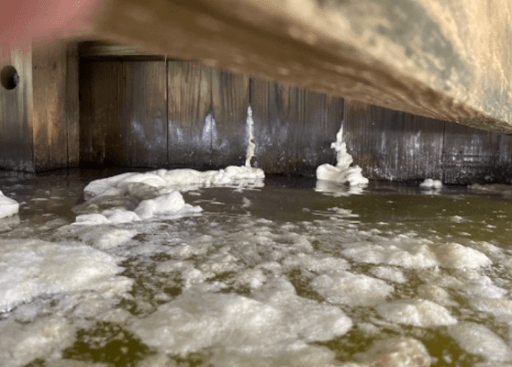
Sinking Concrete Behind Your Bulkhead? What Galveston Waterfront Property Owners Need to Know
Sinking Concrete Behind Your Bulkhead? What Galveston Waterfront Property Owners Need to Know Owning waterfront property in Galveston comes with conditions that inland property owners rarely have to consider. Water levels change, storms push tremendous volumes of...