
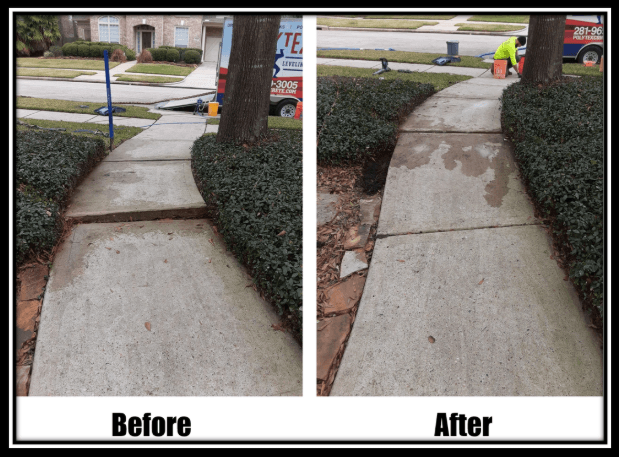
Concrete is strong, but it is only as reliable as the ground beneath it. When a driveway, sidewalk, patio, pool deck, warehouse floor, or commercial concrete slabs begins to sink, the surface damage is usually just the symptom. The real problem is happening underground and out of sight.
In Houston, concrete settlement is extremely common because the soil is constantly moving. Between expansive clay, heavy rain, poor drainage, drought cycles, and storm water runoff, the ground beneath concrete slabs is rarely still. Over time, that movement creates voids, weak spots, and uneven support. After this occurs, the soil can no longer carry the slab evenly, the concrete begins to crack, dip, tilt, or separate creating a series of unsightly and dangerous concerns.
Understanding why concrete sinks is the first step toward repairing it correctly.
Houston Soil Is Constantly Moving
Houston is known for expansive clay soil. This type of soil reacts strongly to changes in moisture. When it rains, clay absorbs water and expands. When conditions dry out, the same soil shrinks and pulls away.
That cycle creates movement beneath concrete.
Over time, this expansion and contraction can cause:
- Small gaps beneath slabs
- Uneven soil pressure
- Cracking in concrete surfaces
- Settlement around driveways and sidewalks
- Voids beneath patios, pool decks, and garage floors
The slab itself may still be structurally sound, but the soil below it is no longer providing consistent support.
This is why replacing concrete without correcting the soil problem often leads to the same issue returning later.
Heavy Rainfall Makes Settlement Worse
Houston receives intense rainfall throughout the year, and those storms can move a lot of water in a short amount of time. When water flows across or beneath concrete, it can wash away soil particles.
This process is called erosion.
As soil erodes, empty spaces form beneath the slab. These spaces are commonly called voids. At first, the slab may bridge over the void without visible damage. Eventually, the unsupported concrete begins to sink.
Common areas where storm water causes soil loss include:
- Driveway edges
- Sidewalk joints
- Pool decks
- Garage entrances
- Culvert crossings
- Commercial parking areas
- Slabs near downspouts or drainage paths
Once water finds a path beneath concrete, it tends to keep using that same path during future storms.
Poor Drainage Is One of the Biggest Causes
Many concrete problems begin with drainage. If water is not directed away from a slab, it will eventually find a way underneath it.
Poor drainage can come from several sources:
- Downspouts discharging too close to concrete
- Improper grading around the property
- Clogged drainage systems
- Low spots that collect water
- Runoff from roofs, parking lots, or driveways
- Damaged or undersized culverts
When water sits near concrete or repeatedly flows beneath it, the soil weakens. Over time, the slab begins to settle into the unstable area.
This is why concrete leveling should never be viewed as just a surface repair. A lasting solution must consider what water is doing beneath and around the slab.
Voids Beneath Concrete Are Often Hidden
One of the most frustrating things about sinking concrete is that the problem is usually invisible at first.
A homeowner may only notice a small crack. A business owner may notice water pooling near a loading area. A property manager may see a sidewalk panel sitting slightly lower than the one next to it.
Beneath the surface, however, the soil may already be washing away.
Signs that voids may be forming include:
- Hollow sounds when walking or tapping on concrete
- Cracks that continue widening
- Uneven slab edges
- Water pooling after rain
- Soil washing out from the sides
- Gaps between concrete and nearby structures
By the time settlement becomes obvious, the slab has usually been unsupported for a while.
Poor Compaction Can Cause Long-Term Problems
Not every settlement issue is caused by rain or erosion. Some problems begin during construction.
Before concrete is poured, the soil beneath it must be properly prepared and compacted. If the subgrade is loose, uneven, or poorly compacted, it may continue settling after the concrete is installed.
This is especially common around:
- New driveways
- Patios and sidewalks
- Commercial slabs
- Utility trenches
- Backfilled areas
- Culvert installations
The concrete may look fine at first, but as the soil compresses over time, the slab loses support and begins to sink.
Poly injection can help correct these issues by filling voids and stabilizing the loose soil beneath the slab.
Tree Roots and Organic Material Can Also Play a Role
Tree roots can affect concrete in several ways. Large roots may lift or displace slabs, but they can also contribute indirectly to settlement.
Trees absorb moisture from the soil. During dry periods, this can cause nearby clay soil to shrink more aggressively. As the soil pulls away, concrete can lose support.
Organic material beneath slabs can also decay over time. When roots, wood, or other organic matter break down underground, they leave behind small voids. Those voids can eventually contribute to settlement.
This is one reason older properties often experience concrete movement years after installation.
Concrete Settlement Is More Than a Cosmetic Issue
A sinking slab may not seem urgent at first, especially if the concrete is still usable. However, settlement tends to worsen over time.
Uneven concrete can create:
- Trip hazards
- Drainage problems
- Vehicle damage
- Cracks that spread
- Water intrusion near structures
- Reduced curb appeal
- Liability concerns for commercial properties
For businesses, uneven concrete can affect loading docks, warehouse floors, walkways, and customer access areas. For homeowners, it can impact driveways, sidewalks, patios, pool decks, and garage floors.
The longer the issue goes untreated, the more likely it is to become expensive.
Why Concrete Replacement Does Not Always Fix the Problem
Many property owners assume that sinking concrete must be removed and replaced. In some cases, replacement may be necessary. But often, the existing slab is still in good condition.
The problem is not the concrete. The problem is the lack of support underneath it.
If a slab is replaced without stabilizing the soil, the new concrete may settle again for the same reason the original slab failed.
That is why PolyTex Concrete focuses on correcting the cause of settlement whenever possible.
How Poly Injection Helps Stabilize Sinking Concrete
Poly injection, also known as polyurethane foam injection, is designed to lift settled concrete and stabilize the soil beneath it.
The process begins with a careful inspection of the affected area. Technicians identify where settlement has occurred and determine where voids are likely present. Small access holes are drilled into the slab, and polyurethane foam is injected beneath the surface.
As the foam expands, it fills voids, compacts loose soil, and gently lifts the slab back toward its proper position.
Once cured, the foam creates a stable support system beneath the concrete.
This method is effective because it addresses both the visible problem and the hidden cause.
Why Poly Injection Works Well in Houston
Houston’s soil conditions make lightweight stabilization especially valuable.
Traditional repair methods may add heavy material beneath a slab, which can place more stress on already unstable soil. Polyurethane foam is different. It is lightweight, water-resistant, and strong enough to support concrete without overloading the ground beneath it.
This makes it well suited for Houston properties dealing with:
- Expansive clay soil
- Storm water erosion
- Voids beneath slabs
- Poor drainage conditions
- Repeated settlement
The goal is not just to raise the concrete. The goal is to restore lasting support beneath it.
Where Concrete Settlement Commonly Happens
PolyTex regularly addresses settlement in both residential and commercial settings.
Common residential areas include:
- Driveways
- Sidewalks
- Pool decks
- Patios
- Garage floors
- Walkways
Common commercial areas include:
- Warehouse floors
- Loading docks
- Retail sidewalks
- Parking lots
- Storage facilities
- Industrial slabs
Settlement can also occur around culvert pipes, drainage structures, manholes, and other infrastructure where soil loss is common.
When to Schedule an Inspection
Concrete settlement is easiest to repair when it is caught early.
You should consider scheduling an inspection if you notice:
- One section of concrete sitting lower than another
- New or widening cracks
- Water pooling after rain
- Soil washing out around slab edges
- Trip hazards on sidewalks or walkways
- Gaps near garage floors, steps, or foundations
These are signs that the support beneath the concrete may be compromised.
Final Thoughts
Concrete sinks in Houston because the ground beneath it is constantly changing. Expansive clay soil, heavy rainfall, storm water erosion, poor drainage, and void formation all contribute to settlement.
The key to a lasting repair is addressing the problem below the surface.
PolyTex Concrete helps homeowners, businesses, property managers, and municipalities restore support beneath sinking concrete through professional poly injection and soil stabilization solutions. By filling voids, stabilizing soil, and lifting settled slabs, PolyTex provides a smarter alternative to unnecessary replacement.
If your concrete is cracking, sinking, or collecting water, the problem may be deeper than what you can see. Contact PolyTex Concrete today to schedule a free inspection and find out how early stabilization can protect your property long-term.