
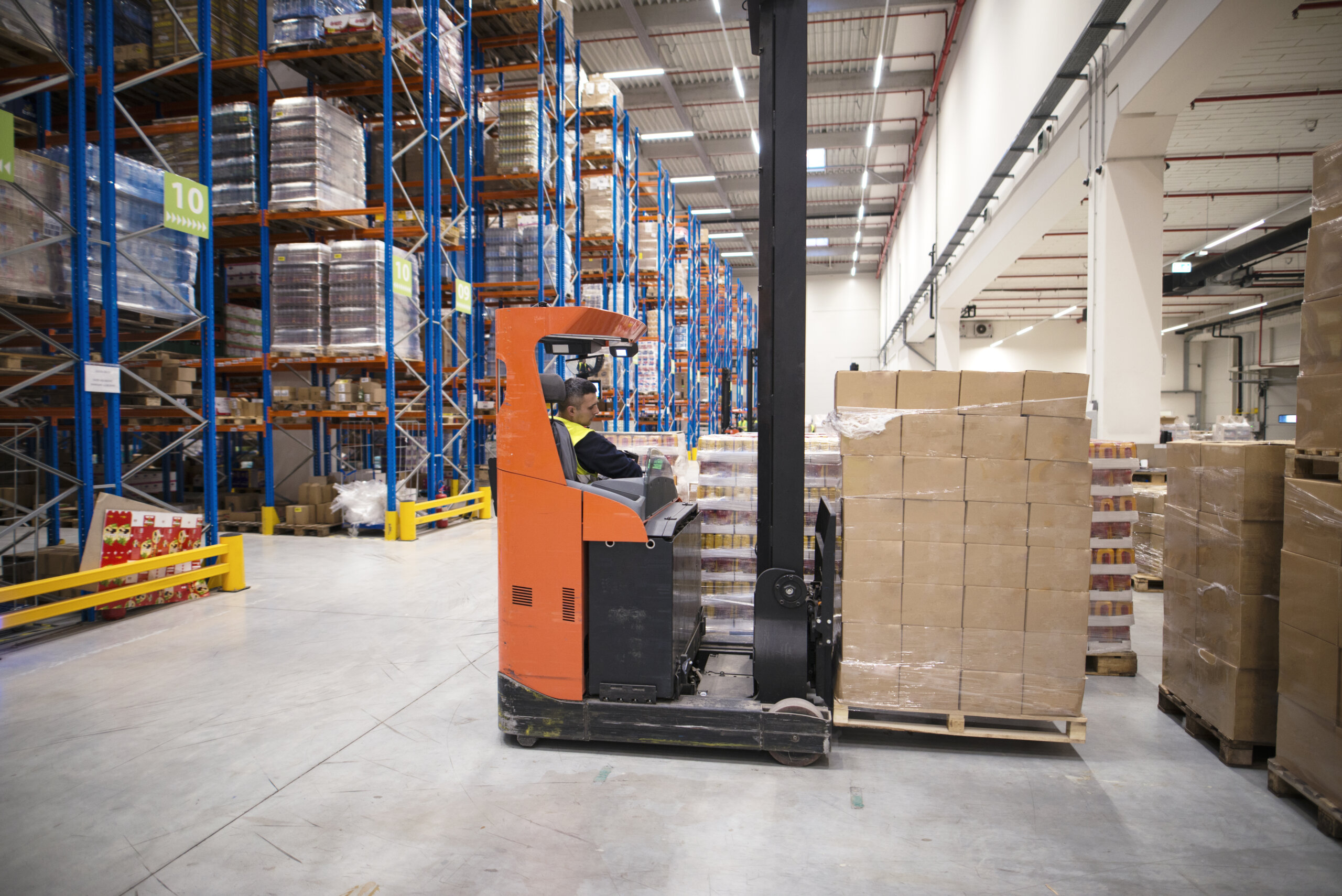
Loading docks are built to work and withstand heavy usage and heave loads. Every day, they handle delivery trucks, forklifts, pallet jacks, heavy inventory, repeated impacts, and constant movement between a building and the vehicles serving it. Because loading docks are designed for heavy use, it can be easy to assume that a crack, slight depression, or uneven section of concrete is simply normal wear.
Sometimes that is the case, but other times, those changes are evidence that the concrete is losing support beneath the surface.
For warehouses, distribution centers, manufacturing facilities, retail operations, storage facilities, and other commercial properties throughout Houston and Southeast Texas, loading dock settlement can become much more than a concrete maintenance issue. Changes in elevation can interfere with dock operations, affect equipment movement, create drainage problems, and eventually lead to more extensive repairs if the underlying cause is not addressed.
The important question is not simply why the concrete cracked. Facility managers and operators need to understand why the concrete moved so the REAL issue can be addressed.
Why Loading Dock Concrete Settles
Concrete performs best when the soil and base materials beneath it provide consistent support. Loading docks complicate that relationship because they combine heavy loads with frequent traffic, drainage systems, utility infrastructure, and transitions between interior and exterior concrete.
When supporting material beneath one section of the dock settles or disappears, the slab above can begin to move. Poor compaction, underground erosion, drainage failures, utility trenches, and changing soil moisture can all contribute to the problem.
The concrete may be the first place the problem becomes visible, but the cause often begins underground.
Heavy Loads Can Reveal Weak Support Beneath the Slab
Loading docks routinely experience concentrated loads from trucks, trailers, forklifts, material handling equipment, and stored products. Structurally suitable concrete with proper support is designed to handle substantial loads, but those same loads become more problematic when a void develops beneath the slab.
Imagine a concrete section that was originally supported evenly across its entire underside. If soil disappears from beneath one portion, the concrete must begin bridging that unsupported area. Each truck, forklift, or pallet load places additional stress on a slab that no longer has the support conditions it was intended to have.
Heavy traffic may not have caused the original problem. Instead, it can expose a weakness that developed below the surface.
Water Is Often Part of the Story
Loading docks are particularly vulnerable to water because they frequently sit at transitions between the building and exterior pavement. Rainwater may flow toward the dock from roofs, drive lanes, parking areas, truck courts, or surrounding grades. Trench drains, stormwater systems, downspouts, and other drainage infrastructure may also be located nearby.
If water begins traveling beneath the concrete, it can gradually carry away fine soil particles and create underground voids. Drainage problems can also saturate or soften supporting materials, changing how effectively they support the slab.
Facility managers and property owners should pay attention to recurring standing water, soil washout, damaged drainage structures, gaps along slab edges, and settlement around drains. These symptoms may indicate that water is affecting more than the surface.
Poor Compaction May Not Become Obvious for Years
Loading dock areas often require substantial site preparation during construction. Fill may be placed to establish elevations, while utility and drainage trenches are excavated and later backfilled. If any of these materials continue consolidating after construction, the concrete above can gradually lose support.
This type of settlement may take years to become noticeable. A facility can operate normally for a long time before employees begin noticing an uneven transition or a section of concrete that seems to be getting lower. The age of the building does not necessarily tell you when the underlying problem began.
Houston Soil Adds Another Variable
Commercial properties throughout the Houston area also contend with moisture-sensitive soils. Expansive clay can change volume as moisture conditions fluctuate, creating movement beneath concrete even when no obvious erosion is occurring.
During prolonged wet periods, clay can absorb moisture and expand. During dry conditions, it can contract. These changes may not happen uniformly across an entire loading dock or truck court, which can contribute to differential movement between neighboring sections.
Combined with heavy rainfall and concentrated commercial drainage, Southeast Texas soil conditions make understanding what is happening beneath the slab especially important.
Warning Signs Facility Managers Should Watch For
Loading dock settlement does not always begin with dramatic structural damage. The first signs may be relatively minor changes that employees notice during everyday operations.
Watch for:
- New bumps or dips in forklift travel paths
- Uneven joints between concrete sections
- Cracks that continue widening
- Standing water near dock areas
- Settlement around drains
- Gaps beneath slab edges
- Changes in transitions between interior and exterior floors
- Repeated patch failures
- Hollow-sounding areas of concrete
- Visible soil loss near pavement edges
Operators and maintenance employees can be particularly valuable sources of information. Someone driving the same forklift route every day may notice a changing floor or pavement condition long before it becomes obvious during a visual inspection.
The Dock-to-Truck Transition Deserves Attention
Loading docks depend on predictable transitions between the building, dock equipment, and trailers. When surrounding concrete elevations change, those relationships can also change.
Dock levelers and related equipment are designed to accommodate differences between dock and trailer heights, but unexpected settlement in surrounding slabs can still affect how employees and equipment move through the area. An increasingly uneven transition may create additional impacts, vibration, or difficulty during material movement.
Settlement around dock equipment should be evaluated carefully. PolyTex can address suitable concrete and supporting-soil conditions, while concerns involving the structural condition or operation of dock equipment should be evaluated by the appropriate qualified professional.
That separation of responsibilities matters in an active industrial environment.
Forklifts Make Small Problems Noticeable
A person walking across a slight depression might barely notice it. A loaded forklift crossing that same area repeatedly throughout a shift can make the problem much more apparent.
Uneven concrete can contribute to rough equipment travel, load movement, vibration, and additional impacts on wheels and material handling equipment. In high-volume operations, the same uneven joint may be crossed hundreds of times each day.
Facility managers should take recurring operator complaints seriously. If several employees begin mentioning the same bump, dip, or rough transition, it may be worth investigating what has changed beneath the concrete.
Hidden Voids Can Exist Beneath Apparently Good Concrete
One of the challenges with loading dock settlement is that soil loss does not always create immediate surface damage. Concrete can temporarily bridge across an unsupported area, allowing a hidden void to grow beneath a slab that still appears relatively intact. As erosion or consolidation continues, the unsupported area can become larger. Eventually the concrete begins settling, cracking, or responding differently under load. This is why visible soil washout or recurring drainage problems near otherwise good concrete should not be ignored. The opportunity to stabilize the area may be better before the slab experiences extensive cracking or deterioration.
Repeated Surface Repairs May Be Treating the Wrong Problem
Commercial maintenance teams are often good at keeping facilities operational, which sometimes means quickly patching cracks or uneven areas as they appear. Surface repairs have their place, but they cannot restore missing support beneath a slab. If the same area repeatedly cracks or settles after repairs, the problem may not be the concrete surface. A void, poorly compacted fill, or continuing soil erosion beneath the slab may be causing the movement. Before patching the same location again, it may be worth investigating whether the repair needs to happen below the concrete rather than above it.
Does a Settled Loading Dock Need to Be Replaced?
Some concrete does need replacement. Severely fractured, deteriorated, improperly designed, or otherwise unsuitable slabs may not be good candidates for leveling.
However, settlement alone does not automatically mean demolition is necessary. When the existing concrete remains suitable for repair and the primary problem is lost support beneath the slab, polyurethane injection can provide an alternative. Instead of removing the entire section, PolyTex can access the area through relatively small injection points and address voids beneath the existing concrete. For an operating warehouse or distribution facility, preserving usable concrete can significantly reduce disruption.
How Polyurethane Injection Works at Loading Docks
PolyTex uses structural polyurethane injection to fill underground voids and restore support beneath suitable concrete. After evaluating the affected area, small access points are created through the slab and polyurethane is injected into the spaces below.
As the material reacts and expands, it moves through available voids and helps restore contact between the concrete and supporting ground. Controlled injection may also allow settled sections to be carefully raised when project conditions make leveling appropriate.
Depending on the specific problem, polyurethane injection can help:
- Fill hidden voids beneath the slab
- Restore support to unsupported concrete
- Stabilize loose surrounding soils
- Reduce certain elevation differences
- Preserve existing concrete
- Minimize demolition and reconstruction
The focus is not simply on making the concrete look level again. The goal is to improve the support conditions that allowed the movement to occur.
Reduced Downtime Matters in Commercial Repairs
A loading dock that cannot operate can quickly affect an entire facility. Trucks may need to be redirected, deliveries rescheduled, inventory moved through alternate entrances, and employees reassigned.
Traditional concrete replacement can involve demolition, debris removal, subgrade preparation, repouring, and curing before the repaired area is ready for normal use. Depending on the scope of the project, that can create significant operational challenges.
Polyurethane injection is considerably less invasive and the material reacts rapidly. Suitable repairs can often be performed in targeted areas, allowing facility managers to coordinate work around operational requirements and reduce the amount of time an area remains unavailable. For commercial properties, that operational advantage can be as important as the physical repair itself.
Loading Dock Settlement May Connect to a Larger Site Problem
An uneven dock should not always be viewed in isolation. If stormwater is causing erosion near the loading area, similar conditions may exist beneath the truck court, adjacent sidewalks, parking areas, warehouse slabs, or drainage structures. A comprehensive site evaluation can help identify whether the visible settlement is an isolated issue or part of a broader pattern.
Facility managers should look at surrounding areas for standing water, recurring cracks, soil washout, settled pavement, or changes near drainage infrastructure. Those clues can help explain why the loading dock moved and whether other areas deserve attention.
Fixing the Water Source Is Part of the Long-Term Solution
Polyurethane injection can restore support where soil has been lost, but an active drainage failure still needs to be corrected. If a damaged storm drain, leaking pipe, blocked culvert pipe, poor grading, or uncontrolled runoff continues directing water beneath the concrete, the source of the erosion remains. Depending on the property, resolving the issue may require coordination with drainage contractors, plumbers, engineers, facility maintenance teams, or other professionals.
Addressing both the settlement and the condition that caused it provides a stronger long-term strategy than treating either issue independently.
When Should a Loading Dock Be Evaluated?
Facility managers do not need to wait until a loading dock becomes unusable. An evaluation makes sense when the concrete is visibly changing, operators report increasingly rough transitions, drainage patterns have shifted, or the same area repeatedly requires surface repairs.
Early evaluation can help determine whether the problem involves a relatively localized void or a larger area of unstable support. It can also help preserve more of the existing concrete before continued movement causes additional cracking or deterioration. In commercial environments, finding a problem early usually provides more options for planning the repair around business operations.
Final Thoughts
Loading dock settlement can begin as a small concrete problem and gradually become an operational concern. Heavy traffic, poor compaction, stormwater, underground erosion, expansive clay, and hidden voids can all contribute to lost support beneath commercial slabs. The visible crack or low spot is only part of the story. Understanding what changed beneath the concrete is what allows property owners and facility managers to choose the right repair.
PolyTex Concrete provides commercial concrete leveling, polyurethane injection, void filling, and soil stabilization solutions throughout Houston, Galveston, Conroe, The Woodlands, and surrounding Southeast Texas communities. From loading docks and warehouse floors to parking lots and other commercial concrete, PolyTex focuses on restoring support while minimizing disruption to active facilities.
If your loading dock is developing uneven concrete, recurring cracks, drainage problems, or changing transitions, schedule a free evaluation with PolyTex Concrete. Addressing lost support before settlement becomes severe can help preserve existing concrete and keep your operation moving.