
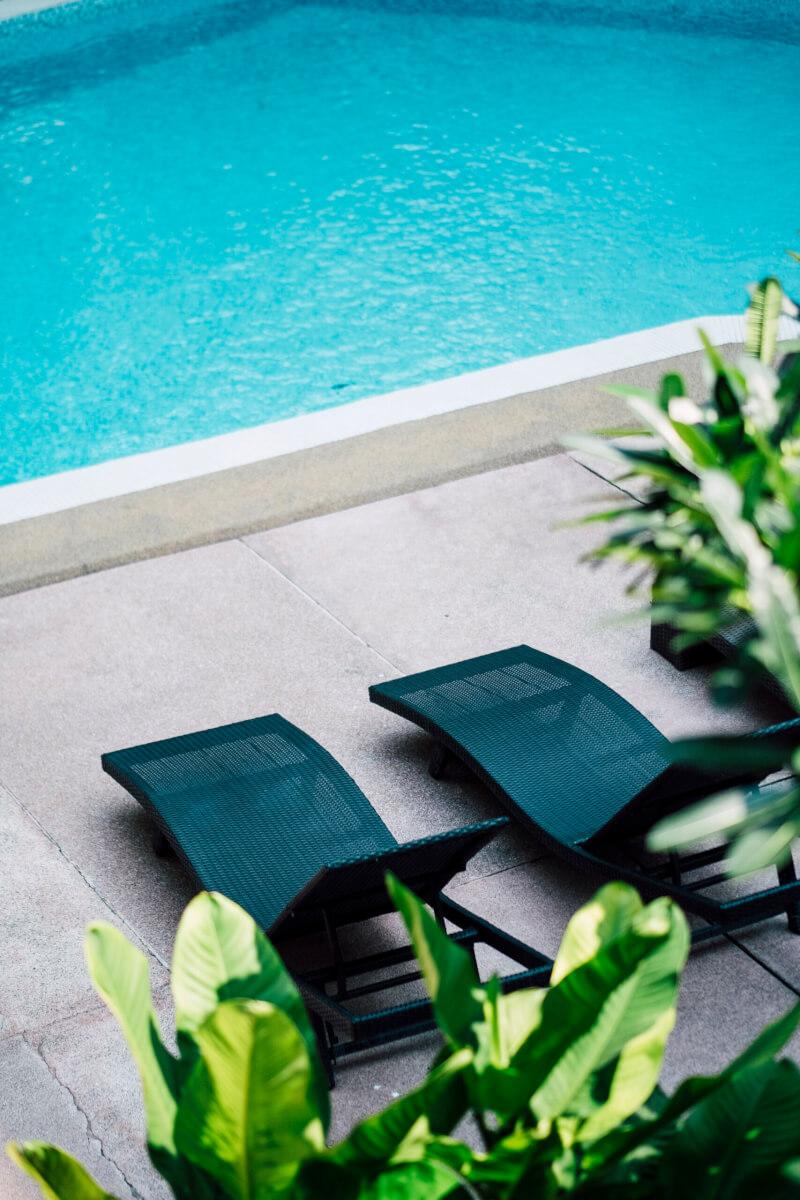
A backyard pool should be a place where your family can relax, entertain friends, and enjoy the outdoors. When the concrete surrounding that pool, known as a pool deck, begins to sink or become uneven, however, the problem can quickly change how you use the entire space. Maybe one section of the pool deck has dropped enough to create a noticeable edge between slabs. Water that once drained away now collects near the pool after every storm. A crack seems to be getting wider, or you have started warning guests to watch their step in one particular area.
For homeowners throughout Houston, Conroe, The Woodlands, Galveston, and surrounding Southeast Texas communities, these problems are common. They also do not necessarily mean your pool deck needs to be torn out and replaced. In many cases, the concrete itself is still usable. The problem is what has happened to the soil underneath it.
Understanding why residential pool decks settle can help you determine whether the existing concrete can be stabilized, leveled, and preserved.
Why Does Concrete Around a Swimming Pool Sink?
Every concrete slab depends on consistent support from the soil beneath it. When that support changes, the concrete can move even if the slab itself remains relatively strong. Pool decks are particularly vulnerable because water is constantly present around them. In addition to Houston’s heavy rainfall, the area surrounding a swimming pool is exposed to splashing, overflowing water, landscape irrigation, pool maintenance, and drainage from the surrounding yard. Over time, water can find pathways beneath the concrete and begin affecting the supporting soil.
Fine soil particles may gradually wash away, loose fill can continue settling, or changing moisture levels can cause expansive clay to shrink and swell. As support disappears beneath one section of the deck, the concrete above can begin settling into the newly created space. The result is an uneven pool deck, but the actual problem started below the surface.
Pool Construction Can Create Conditions for Future Settlement
There is another reason pool decks deserve special attention. Installing an inground swimming pool requires substantial excavation. After the pool structure is placed, portions of the excavated area surrounding it must be backfilled before the pool deck and surrounding improvements are completed. The quality and compaction of that material can influence how the concrete performs years later.
If fill material continues consolidating after construction, portions of the pool deck may gradually lose support. Settlement may not become obvious immediately. The backyard can look great for years before a low spot, crack, or uneven joint begins to appear. This is one reason homeowners can experience pool deck settlement even when there is no obvious drainage failure.
Houston’s Soil Makes Moisture Especially Important
The expansive clay soils found throughout much of the Houston region add another layer to the problem. Clay can change volume significantly as its moisture content changes, expanding during wet periods and contracting during prolonged dry conditions.
Around a swimming pool, those moisture levels may not be uniform. One portion of the deck may receive regular irrigation while another is exposed to direct sun. Water may collect near one corner while another area dries quickly. Landscaping, drainage patterns, and even the pool itself can influence moisture conditions around the deck. These differences can create uneven support beneath neighboring sections of concrete, contributing to differential settlement over time.
Warning Signs Your Residential Pool Deck Is Settling
Pool deck problems usually develop gradually, which makes them easy to overlook at first. A small elevation difference may not seem important until it continues growing or someone trips over it.
Homeowners should watch for:
- Uneven joints between concrete sections
- Cracks that appear to be widening
- New low spots around the pool
- Standing water after rain or pool use
- Gaps beneath exposed slab edges
- Soil washing away near the concrete
- Sections that sound hollow when tapped
- Changes in the transition between the pool deck and patio
- Areas where furniture no longer sits level
The most important thing to notice is change. A stable cosmetic crack is different from an area that continues moving from one season to the next.
Trip Hazards Matter More Around a Swimming Pool
Any uneven sidewalk can create a trip hazard, but pool decks deserve additional attention because people frequently use them barefoot and the concrete is often wet. Children may be moving around the pool, guests may be unfamiliar with the property, and wet feet can make even a relatively small elevation difference more noticeable. Pool toys, towels, furniture, and other objects can also make it harder to see an uneven joint. Correcting settlement helps restore a more consistent walking surface and allows homeowners to enjoy the backyard without constantly warning everyone about “that spot by the pool.”
Standing Water Can Tell You the Deck Has Moved
One of the most useful warning signs is a change in drainage. If an area of your pool deck suddenly begins holding water when it did not before, the concrete elevation may have changed. A settled section creates a low point, and water naturally collects there. That standing water can then contribute to additional problems by finding cracks, joints, and slab edges where it can reach the soil below. If erosion is already occurring, repeated saturation can make the situation worse. This creates a cycle where settlement causes poor drainage and poor drainage contributes to additional soil movement. Restoring the slab elevation can improve surface drainage, but homeowners should also determine why excess water is reaching the area in the first place.
Does Pool Deck Settlement Mean the Pool Is Damaged?
The pool structure and the surrounding deck are not always part of the same structural system. Concrete around a pool can settle because of conditions immediately beneath the deck while the pool itself remains unaffected. That does not mean every crack or movement should be ignored. If there are signs of significant movement involving the pool structure, coping, plumbing, or other components, the appropriate pool professional or engineer may need to evaluate those concerns. PolyTex focuses on the concrete deck, underground voids, and supporting soil within the scope of the stabilization project. A sinking pool deck should be evaluated, but homeowners should not automatically assume it means the swimming pool itself is failing.
What About Cracks Between the Pool Deck and Coping?
Changes near the pool edge tend to get homeowners’ attention quickly, and understandably so. Movement between the surrounding deck, coping, and pool structure can have several possible causes. Because these components may be constructed differently and designed to move independently in certain situations, the appearance of a gap or crack alone does not identify the underlying problem.
If the surrounding deck has visibly settled, restoring support beneath suitable concrete may be part of the solution. Concerns involving the pool shell, coping system, or structural components should be evaluated separately by qualified professionals when necessary. The goal is to repair the actual problem rather than make assumptions based only on where a crack appears.
You May Not Need to Tear Out the Pool Deck
When homeowners see sinking or cracked concrete, replacement often feels like the only option. Around a pool, that can become a major project. Removing an existing pool deck may involve demolition close to the pool structure, hauling concrete through the property, protecting landscaping and fencing, preparing new subgrade, placing new concrete, and waiting for the replacement surface to be ready.
Decorative finishes make the decision even more complicated. A homeowner may have stamped, textured, stained, or otherwise customized concrete that would be difficult to match. If the existing slab remains suitable for repair and the primary issue is lost support underneath it, polyurethane concrete leveling may allow much of that concrete to remain in place.
How Polyurethane Pool Deck Leveling Works
PolyTex Concrete uses structural polyurethane injection to restore support beneath suitable settled pool decks. Small access points are created through the existing concrete, allowing polyurethane to be injected beneath the slab.
As the material reacts and expands, it moves through available underground spaces and fills voids that have developed beneath the concrete. Controlled injection can also help raise settled sections when leveling is appropriate.
Depending on the conditions, the process can help:
- Fill hidden voids
- Restore support beneath the pool deck
- Stabilize loose surrounding soils
- Reduce certain elevation differences
- Improve surface drainage
- Preserve existing concrete
- Minimize disruption to landscaping and the backyard
Instead of demolishing the deck to reach the soil, the repair is performed through relatively small access points in the existing slab.
Why Polyurethane Is Well Suited for Backyard Repairs
Backyards can be difficult construction environments. Access may be limited by fences, landscaping, outdoor kitchens, covered patios, retaining walls, or the pool itself. Traditional demolition can require moving substantial equipment and concrete debris through those spaces.
Polyurethane injection is much less invasive. The equipment can be used to perform targeted repairs without removing large sections of otherwise usable concrete, which can be particularly valuable around finished outdoor living spaces. For homeowners who have invested heavily in their backyard, preserving as much of the existing space as possible can be an important advantage.
What About Decorative or Stamped Concrete?
This is another situation where preserving the existing slab can be valuable. Replacing one section of an older decorative pool deck may create a matching problem. Concrete color changes as it ages, stamps vary, and an exact match may be difficult even when the original pattern is known.
Leveling does not make existing cracks or cosmetic damage disappear, and injection locations still need to be patched. However, keeping the existing slab may allow homeowners to retain much more of the original appearance than demolition and partial replacement would. Whether a particular decorative surface is a good candidate should be evaluated before work begins.
Pool Deck Settlement Can Be Part of a Larger Backyard Drainage Problem
When PolyTex evaluates a settling pool deck, the surrounding yard can provide important clues. Is water flowing toward the pool after storms? Are downspouts discharging nearby? Is irrigation oversaturating one side of the deck? Has soil washed away near a slab edge? Does water collect between the house and pool? These conditions may explain why the deck lost support in the first place.
The same drainage issue may also affect patios, outdoor kitchens, sidewalks, or other backyard concrete. Looking at the entire area helps homeowners understand whether the settlement is isolated or part of a broader pattern of water and soil movement.
Fix the Cause, Not Just the Low Spot
Polyurethane can fill voids and restore support beneath settled concrete, but a continuing source of erosion still needs attention. A leaking pool line, damaged irrigation system, poorly directed downspout, or major drainage problem should be corrected as part of the overall solution. Otherwise, water may continue affecting soils in other locations.
This is an important part of PolyTex’s approach to concrete leveling and soil stabilization. The goal is not simply to make the concrete look better for the moment. It is to understand why the problem developed and help create conditions for better long-term performance.
When Is Pool Deck Replacement the Better Choice?
Not every pool deck should be leveled. Concrete that is severely deteriorated, extensively fractured, improperly constructed, or affected by conditions outside the capabilities of leveling may need to be replaced. Major changes to the backyard design may also make replacement more practical. The condition of the slab matters just as much as how far it has settled. A professional evaluation allows homeowners to determine whether the existing concrete is worth preserving before committing to a much larger demolition project.
Don’t Wait Until Pool Season to Address the Problem
Pool deck settlement is often easiest to ignore when the pool is not being used every day. Then warm weather arrives, guests come over, and suddenly the uneven section becomes impossible to overlook. Evaluating the problem earlier gives homeowners more time to understand the cause, address drainage concerns, and complete appropriate repairs before the backyard is being used heavily. More importantly, soil movement does not follow the swimming calendar. If erosion is occurring beneath the deck, it can continue whether the pool is being used or not.
Final Thoughts
A sinking residential pool deck can make an otherwise beautiful backyard feel unfinished and unsafe, but uneven concrete does not automatically mean the entire deck needs to be replaced. Heavy rainfall, expansive clay, poorly compacted fill, drainage problems, and underground erosion can all create voids and changing support conditions beneath pool decks throughout Southeast Texas. When the existing concrete remains suitable for repair, polyurethane injection may allow homeowners to stabilize the soil, fill hidden voids, and level settled sections while preserving much of the backyard they already have.
PolyTex Concrete provides residential pool deck leveling, polyurethane injection, void filling, and soil stabilization throughout Houston, Conroe, The Woodlands, Galveston, and surrounding Southeast Texas communities.
If your pool deck is sinking, collecting water, developing uneven joints, or creating trip hazards, schedule a free evaluation with PolyTex Concrete. Finding out what is happening beneath the concrete can help you determine whether your pool deck can be restored without the cost and disruption of complete replacement.