
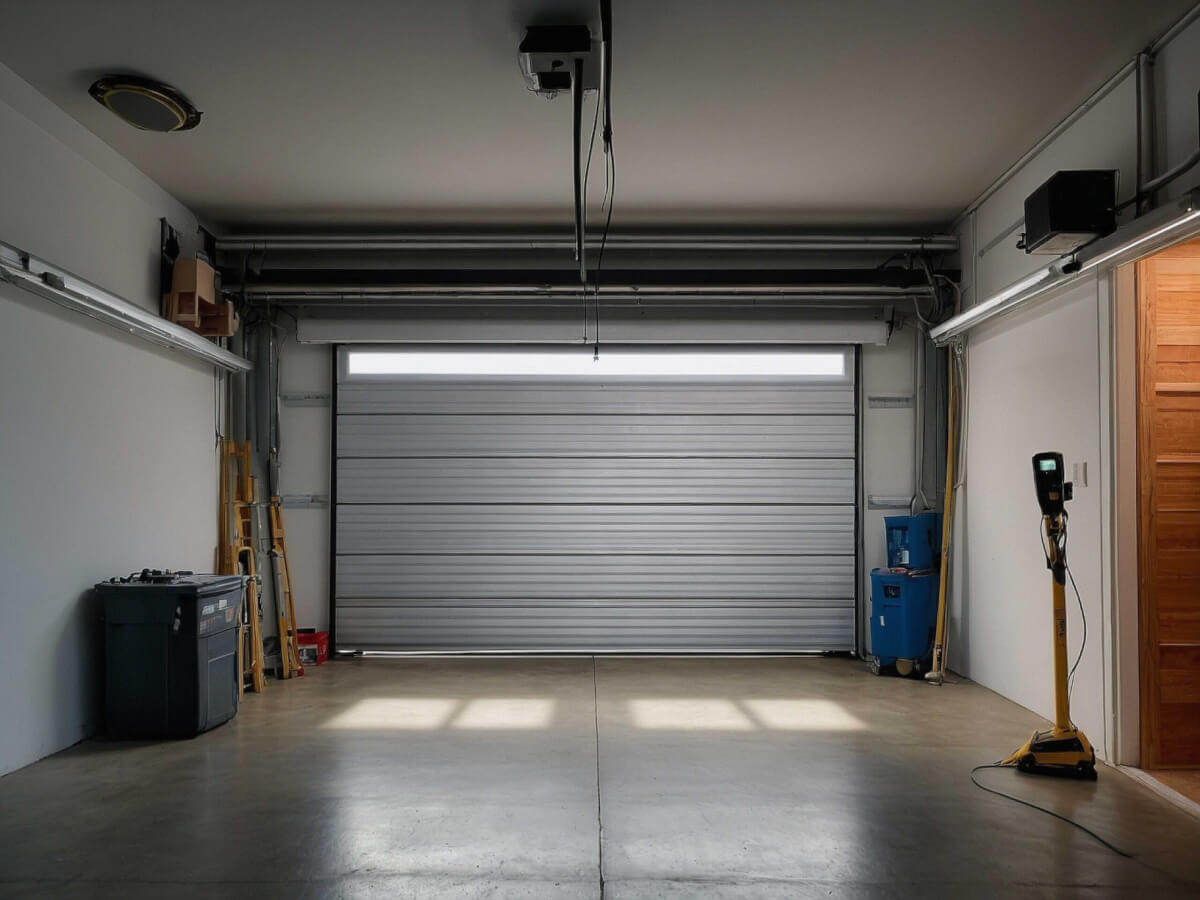
A crack in a garage floor is very easy to ignore. A garage floor that has actually started sinking is different scenario. You may notice the floor no longer lines up properly with the driveway. Water might begin collecting near the garage door. A gap may appear along an edge of the slab. Cracks that seemed insignificant a year ago may suddenly look wider. For many homeowners, the immediate concern is understandable.
Does this mean something is wrong with my home’s foundation? Not necessarily. Garage floor settlement can occur independently from the structural foundation of a home. In many cases, the concrete garage floor is a separate slab supported by soil or fill material beneath it. If that supporting material settles, erodes, or develops voids, portions of the garage floor can move even while other structural components remain stable. That distinction is important.
Throughout Houston, Conroe, The Woodlands, Galveston, and surrounding Southeast Texas communities, changing soil conditions, water movement, poor compaction, and underground erosion can all contribute to garage slab settlement. Understanding what is happening beneath the floor is the first step toward determining the appropriate repair.
Is the Garage Floor Part of the Foundation?
This is where homeowners need to be careful about assumptions. Homes can be constructed in different ways, and the relationship between a garage slab and the structural foundation varies by building design. In some homes, the garage floor is essentially a concrete slab placed within or adjacent to the structural foundation system. The slab itself may not carry the primary structural loads of the house. That means movement in the garage floor does not automatically prove that the home’s foundation is failing. However, significant cracking, wall movement, structural separation, or other concerning symptoms should be evaluated by an appropriately qualified professional.
PolyTex can evaluate settlement and support conditions beneath suitable concrete slabs, but determining the structural condition of a home may require a structural engineer or other qualified foundation professional. A sinking garage floor deserves investigation, but it should not automatically be treated as evidence of foundation failure.
Why Garage Floors Sink
One key factor is that concrete needs uniform support throughout the entire poured slab. When a garage slab is installed, the soil and base material beneath it are intended to support the concrete evenly across the entire surface. If that material changes over time, the slab can begin moving. Several conditions commonly contribute to garage floor settlement.
Poorly Compacted Fill Beneath the Garage
One of the most common causes can begin during construction. The area inside a home’s foundation or garage footprint may require fill material to establish the correct elevation before the slab is poured. That fill must be properly placed and compacted. If portions of the material remain loose, they can gradually consolidate over time.
The process may take years, but as the material becomes denser and occupies less volume, empty space can develop between the supporting soil and the concrete above. Eventually, the slab begins settling into that space. This explains why a garage floor can begin moving long after the home was originally constructed.
Water Can Move Beneath the Slab
Water is another major contributor. A garage may seem protected because it is covered by the house, but water can still reach the soil beneath the slab.
Potential sources include:
- Heavy rainfall
- Poor exterior drainage
- Downspouts discharging near the garage
- Plumbing leaks
- Irrigation leaks
- Water entering along slab edges
- Underground drainage problems
- Water following utility trenches
Once water establishes a path beneath the garage, it can begin changing the supporting soil. In some situations, fine particles are gradually carried away, leaving a hidden behind.
Houston’s Expansive Clay Can Contribute to Movement
Southeast Texas soil presents another challenge. Expansive clay responds dramatically to moisture. When clay absorbs water, it expands but when it dries, it contracts. Those changes do not always occur uniformly beneath a structure. One area may retain moisture while another becomes considerably drier. That can create different support conditions beneath different portions of the slab. Over repeated wet and dry cycles, the garage floor may begin showing evidence of movement.
Warning Signs of Garage Floor Settlement
Not every crack means a garage floor is sinking either. Concrete naturally develops some cracks as it cures and ages. What matters more is whether the floor appears to be changing.
Potential signs of settlement include:
- One section of the floor sitting lower than another
- Growing elevation differences across cracks
- Gaps developing beneath slab edges
- Water collecting in new areas
- A garage-to-driveway transition becoming uneven
- Cracks that continue widening
- Separation between the floor and surrounding components
- Hollow sounds beneath portions of the slab
Changes over time are particularly important. If a crack has looked identical for 15 years, that tells a different story than a crack that has noticeably widened during the past six months.
Pay Attention to the Garage Door
The area near the garage door can provide useful clues. If the slab settles near the entrance, homeowners may notice that the transition between the driveway and garage floor has changed. This change could result in water beginning to flowing into the garage rather than away from it. A low area can develop immediately inside the door and thus the bottom seal may no longer contact the floor consistently. These symptoms do not identify the cause by themselves, but they indicate that the elevation has changed and deserves further evaluation.
The Driveway and Garage Can Affect Each Other
The driveway and garage floor are separate concrete areas, but the conditions affecting one may also affect the other. For example, poor drainage near the garage entrance can contribute to soil loss beneath both slabs. A settled driveway may direct water toward the garage. A gap between the driveway and garage floor may allow additional water beneath the concrete. This is why PolyTex looks beyond the individual low spot. Sometimes the best clues are found in the surrounding property.
Hidden Voids Can Exist Beneath a Garage Floor
Concrete has enough strength to temporarily span an unsupported area. That means soil can disappear beneath a garage slab without immediately causing the concrete to collapse.
A void may exist beneath the surface while the slab continues carrying:
- Vehicles
- Storage
- Workbenches
- Tools
- Lawn equipment
- Everyday foot traffic
Eventually, however, the unsupported area may become large enough that the slab begins settling or cracking. The visible movement may seem sudden, but the reality is that the underground problem may have been developing for years.
Why Filling the Crack Doesn’t Solve Settlement
Crack repair can be useful for appropriate surface damage. But filling a crack does not replace missing soil beneath the slab. If the garage floor continues moving, a repaired crack may simply reopen or another crack may form nearby. That is why recurring cracking deserves closer attention.
The question should not only be “How do we fix this crack?” but also “Why did the concrete move enough to create the crack?”
Does a Sinking Garage Floor Need to Be Replaced?
If the concrete is badly deteriorated, severely fractured, improperly constructed, or affected by conditions that cannot be corrected through leveling, replacement may be appropriate. However, a settled slab does not automatically need demolition. If the concrete itself remains suitable and the primary problem is lost support beneath it, polyurethane injection may provide another option. Preserving the existing floor can eliminate much of the demolition and reconstruction associated with complete replacement.
How Polyurethane Injection Can Stabilize a Garage Floor
PolyTex uses structural polyurethane injection to restore support beneath suitable settled concrete. Small access holes are created through the slab at carefully selected locations. Polyurethane is then injected beneath the floor. As the material reacts, it expands into available voids and helps restore contact between the slab and the supporting ground.
Depending on site conditions and project objectives, the process can:
- Fill hidden voids
- Restore support beneath unsupported areas
- Help stabilize loose soils
- Carefully lift settled sections
- Reduce elevation differences
- Preserve existing concrete
The objective is not simply to push the garage floor upward, but to restore the support that the slab has lost.
Why Polyurethane Works Well Inside Garages
Garage repair creates an obvious challenge as demolition inside an attached structure can be disruptive to the homeowners. Removing an existing slab may involve concrete cutting, breaking, debris removal, subgrade preparation, repouring, and curing.
Polyurethane injection requires significantly smaller access points and can often be performed without removing the existing slab. The material also reacts quickly, reducing the downtime associated with the repair. For homeowners who use their garage every day, minimizing disruption is an important benefit.
What If Water Caused the Problem?
If water caused the issue, then the water source needs attention too. Polyurethane can restore support where soil has been lost, but it does not replace the need to correct an active leak or drainage problem.
Depending on the cause, that may involve:
- Plumbing repair
- Irrigation repair
- Downspout changes
- Exterior grading improvements
- Drainage corrections
- Sealing appropriate entry points
Correcting the cause and repairing the resulting settlement are two different parts of the same problem. Ignoring the first can compromise the second.
When Should You Call an Engineer?
Some symptoms extend beyond routine slab settlement and deserve additional professional evaluation. Consider involving an appropriately qualified structural professional when you observe concerns such as significant wall cracking, structural movement, major separation between building components, unusual door or window problems throughout the home, or other evidence suggesting the issue may extend beyond the garage floor. PolyTex’s expertise is valuable in identifying and correcting voids, soil instability, and settlement beneath suitable concrete. Knowing when another professional should become involved is part of approaching the project responsibly.
Don’t Wait for a Small Problem to Become a Large One
Minor garage floor settlement can be easy to postpone as the cars still fit, the garage door still works, and the crack isn’t enormous. But if soil continues disappearing beneath the slab, the unsupported area may continue growing.
Additional movement can mean:
- More cracking
- Larger elevation differences
- Increasing drainage problems
- Greater repair complexity
- More concrete becoming affected
Early evaluation provides more information and potentially more repair options.
Final Thoughts
A sinking garage floor can look alarming, but it does not automatically mean your home’s foundation is failing. In many cases, the garage slab is responding to changes in the material directly beneath it. Poorly compacted fill, water migration, underground erosion, expansive clay, and hidden void formation can all cause otherwise usable concrete to settle. The key is identifying the cause before deciding on the repair. PolyTex Concrete provides polyurethane concrete leveling, void filling, and soil stabilization solutions throughout Houston, Conroe, The Woodlands, Galveston, and surrounding Southeast Texas communities.
If your garage floor is sinking, cracking, collecting water, or separating from adjacent concrete, schedule a free evaluation with PolyTex Concrete. Understanding what is happening beneath the slab can help determine whether the existing concrete can be stabilized and preserved rather than unnecessarily replaced.