
Why Concrete Slabs Sink Around Commercial Buildings in Houston
Commercial concrete slab settlement can create costly maintenance concerns for property owners, facility managers, and businesses throughout Houston and Southeast Texas. When concrete begins sinking around a commercial building, the problem often starts beneath the surface, where changing soil conditions, underground erosion, or poorly compacted fill reduce support. Sidewalks, entryways, service areas, and exterior pavement can develop cracks, uneven transitions, and drainage problems even when the building itself remains structurally sound.
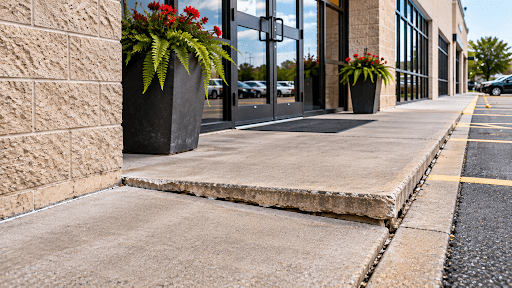
These conditions frequently appear near the perimeter of a building, where concrete surfaces connect to foundations, loading areas, landscaped sections, and underground utilities. A sidewalk may gradually settle below the entrance threshold, or a concrete apron may develop a gap where it meets the building. During heavy rainfall, the resulting low spots can collect water and accelerate existing drainage problems.
Understanding why settlement develops around commercial buildings helps property managers identify the cause before selecting a repair. In suitable conditions, polyurethane injection can restore support beneath existing concrete and correct certain elevation differences without requiring extensive demolition.
Why Commercial Concrete Slab Settlement Develops Near Buildings
Commercial concrete slab settlement often begins where the supporting soil differs from the material beneath the building’s structural foundation. During construction, contractors excavate soil for foundations, underground utilities, and drainage systems. They then replace and compact material around those improvements before installing sidewalks, pavement, and other exterior concrete.
If the backfill does not achieve adequate compaction, it may compress over time. Repeated vehicle loading, changing moisture conditions, and water movement can contribute to additional settlement. Because exterior slabs often rest on relatively shallow supporting material, they may respond differently from deeper or engineered building foundations.
This difference helps explain why a sidewalk can sink next to a building without proving that the building foundation has failed. However, visible movement involving structural walls, columns, or foundation components requires separate professional evaluation.
The Difference Between Building Foundations and Exterior Concrete
Commercial buildings typically rely on engineered foundation systems designed for their structural loads and site conditions. Exterior sidewalks, patios, parking areas, and service aprons may use different construction methods and supporting materials. As a result, these surfaces can move independently. A sidewalk may settle several inches while the adjacent building remains at its original elevation. Conversely, movement affecting a building’s structural foundation can produce symptoms that require specialized engineering investigation.
Property managers should avoid assuming that every crack near a building indicates foundation failure. They should also avoid dismissing significant movement without evaluating the surrounding conditions. A qualified assessment can help determine whether the problem involves an exterior slab, the supporting soil, drainage, or a structural component.
How Poorly Compacted Backfill Creates Settlement
Construction activities frequently disturb the soil surrounding commercial buildings. Contractors excavate trenches for utilities, install drainage systems, and adjust grades before placing the final concrete surfaces. When workers replace excavated material, they must compact it appropriately to create a stable supporting base. If the fill remains loose, it may compress gradually under the weight of concrete and repeated loading.
Settlement may develop near building entrances, utility corridors, or areas where contractors placed deeper sections of fill. The concrete above can remain relatively intact while the supporting material changes elevation. In suitable applications, polyurethane stabilization may help restore support beneath the affected slab. However, the repair should consider whether the settlement has stopped or whether another condition continues affecting the area.
How Houston’s Expansive Clay Soils Affect Commercial Properties
Houston’s clay-rich soils can create challenging conditions for exterior concrete. Certain expansive clays shrink as moisture decreases and swell when water returns. During prolonged dry weather, exposed soil near building perimeters may lose moisture more rapidly than soil protected beneath larger concrete surfaces. Landscaping, irrigation, and nearby drainage features can create additional differences in moisture distribution. When the ground moves unevenly, exterior concrete may experience changing support conditions. Cracks, gaps, or elevation differences can develop where adjacent sections respond differently. However, not every settlement problem results from expansive clay. Poor compaction, erosion, underground utility issues, and construction practices may also contribute. A proper evaluation considers the complete site rather than attributing every crack to Houston’s soil.
Why Drainage Problems Often Begin Near Building Perimeters
Commercial buildings collect and redirect substantial amounts of rainwater through roofs, gutters, downspouts, paved surfaces, and drainage systems. When these systems function properly, they move water away from areas where it could create problems. However, damaged downspouts, poor grading, clogged drains, or leaking underground pipes can concentrate water near exterior concrete. Repeated water movement may soften supporting material or carry fine soil particles through available underground pathways. Over time, the loss of material can create voids beneath sidewalks, entrance slabs, and service areas. Commercial concrete slab settlement associated with drainage problems may continue until the source of water movement receives attention. Filling a void without addressing active erosion can leave the original problem unresolved.
Why Sidewalks Sink Along Commercial Buildings
Sidewalks often run directly beside building walls and landscaped areas. Their supporting soil may differ from the engineered material beneath the building foundation, creating conditions where differential settlement can develop. A sidewalk may begin sinking along one edge, leaving an uneven transition near the entrance or adjacent pavement. In other situations, the entire panel may settle while neighboring sections remain relatively stable. These conditions can affect pedestrian access and create maintenance concerns, especially near high-traffic entrances. Property managers should also consider applicable accessibility requirements when evaluating repair options. Polyurethane leveling may help correct certain sidewalk elevation differences when the concrete remains suitable for lifting. The finished surface must still meet appropriate slope, drainage, and accessibility requirements.
Entrance Slab Settlement and Customer Access
Commercial entrances require consistent transitions between exterior pavement, sidewalks, and building thresholds. When an entrance slab settles, the elevation difference may become noticeable to customers, employees, and delivery personnel. Settlement can also change the direction of surface drainage. A walkway that previously directed water away from the building may begin collecting rainfall near the doors. These conditions deserve attention because they affect both the usability of the entrance and the surrounding drainage system. In suitable situations, targeted stabilization can restore support beneath an entrance slab and correct its elevation. However, repairs should account for door clearances, adjacent structural components, and accessibility standards.
Loading Areas and Service Aprons
Commercial buildings often include concrete aprons near loading docks, service entrances, and equipment access points. These areas experience repeated loading from delivery vehicles, forklifts, and other equipment. When supporting soil settles, the concrete may develop uneven transitions near dock approaches or building entrances. Repeated traffic across these areas can contribute to cracking and additional deterioration. The repair strategy must consider the slab’s thickness, reinforcement, loading requirements, and surrounding structures. Polyurethane injection may provide an option for suitable support problems, but structural loading areas may require engineering review before stabilization.
Why Underground Utilities Can Contribute to Settlement
Commercial properties often contain extensive underground utility networks. Water lines, sanitary sewers, storm drains, electrical conduits, and communication systems may run beneath exterior concrete. The trenches surrounding these utilities contain backfill that may behave differently from the undisturbed soil nearby. If that material settles or experiences erosion, the concrete above can lose support. Leaking pipes and defective drainage connections may introduce additional water into the surrounding ground. Under certain conditions, flowing water can transport soil particles away and create underground voids. Before beginning stabilization, contractors should identify nearby utilities and evaluate whether any active defects require repair. Polyurethane injection should not substitute for necessary utility maintenance.
How Underground Voids Develop Beneath Exterior Slabs
Underground voids can form when supporting material migrates away, compresses, or fails to adequately occupy the space beneath concrete. A slab may temporarily bridge across a small unsupported area without showing obvious surface movement. Over time, repeated loading or continued soil loss may increase stress within the concrete. Eventually, the slab may crack, settle, or develop an uneven transition. Visible gaps beneath slab edges, recurring settlement, and depressions near drainage features can suggest compromised support. However, these symptoms do not establish the size or cause of an underground void. A qualified evaluation should consider the slab’s condition, surrounding drainage, and history of movement before recommending repair.
How Commercial Concrete Slab Settlement Affects Property Maintenance
Commercial concrete slab settlement can create recurring maintenance expenses when property managers address surface damage without identifying the underground cause. For example, replacing a cracked sidewalk panel may improve the appearance of an entrance. However, if the supporting soil continues settling, the replacement slab may eventually experience similar movement. Likewise, patching a low area near a drainage structure may provide temporary improvement without correcting the erosion pathway beneath it. A more effective maintenance strategy evaluates whether the problem involves concrete deterioration, soil loss, poor compaction, or another condition. Understanding the cause helps property managers prioritize repairs and avoid repeatedly addressing the same visible symptom.
How Polyurethane Injection Restores Concrete Support
Polyurethane injection offers a method for restoring support beneath certain settled or unsupported concrete slabs. Technicians introduce specialized expanding material through strategically located access points. As the material reacts, it can occupy available void space and help restore contact beneath the concrete. When appropriate, controlled injection may also lift a settled slab toward its intended elevation. The process requires careful material selection, placement, and monitoring. The condition of the slab, surrounding soil, nearby structures, and expected loading all influence the repair strategy. Not every slab can or should be lifted, particularly where structural components or sensitive equipment may be affected.
When Void Filling Is More Important Than Leveling
A concrete slab does not need to be visibly sinking for underground support loss to exist. In some commercial applications, the slab remains relatively level while a void develops beneath it. This can occur near drainage structures, utility trenches, or areas where supporting soil has migrated. In those situations, the primary objective may involve filling the void rather than changing the slab’s elevation. Other projects require both support restoration and controlled lifting because the concrete has already settled. Understanding the distinction helps contractors select the appropriate repair method and avoid unnecessary movement.
When Concrete Replacement May Be Necessary
Polyurethane leveling is not suitable for every commercial concrete problem. Severely deteriorated slabs, extensive structural cracking, inadequate concrete thickness, or other deficiencies may make replacement the better option. Some surfaces also have specific loading or accessibility requirements that cannot be satisfied through leveling alone. When replacement is necessary, the supporting soil should be evaluated before new concrete is installed. Otherwise, unstable fill or ongoing erosion may affect the replacement surface. The goal is to select a repair method that addresses both the visible concrete condition and the underlying support problem.
Why Early Evaluation Matters for Commercial Property Owners
Small settlement problems may become more difficult to repair when movement continues. A sidewalk that initially develops a minor elevation difference may eventually crack into multiple sections. A low spot near a building entrance may begin collecting more water, contributing to additional drainage concerns. Early evaluation can help determine whether the concrete remains suitable for stabilization before extensive damage develops.
However, not every minor crack requires immediate repair. Property managers should prioritize progressive settlement, visible voids, recurring drainage problems, and conditions affecting access or operations. Documenting changes over time can provide useful information during the evaluation process.
Commercial Concrete Repair in Houston and Southeast Texas
Commercial properties throughout Houston, Conroe, The Woodlands, Galveston, and surrounding Southeast Texas communities encounter settlement problems influenced by local soil conditions, rainfall, construction practices, and everyday loading. Exterior concrete near building perimeters can be particularly vulnerable because the supporting soil may differ from the material beneath the building’s structural foundation.
PolyTex Concrete provides polyurethane concrete leveling, underground void filling, and soil stabilization for appropriate commercial applications. Our services can help restore support beneath serviceable concrete while complementing drainage repairs, utility maintenance, and engineering recommendations when necessary.
Protect the Concrete Around Your Commercial Building
Sinking sidewalks, uneven entrance slabs, and settlement near loading areas can create maintenance concerns for commercial properties. Although the visible damage occurs at the surface, the underlying cause often involves changes in the supporting soil.
Commercial concrete slab settlement does not automatically mean the building foundation has failed or that the entire concrete surface requires replacement. In suitable conditions, polyurethane injection may help restore support and correct settlement while preserving existing concrete.
PolyTex Concrete works with commercial property owners, facility managers, general contractors, and infrastructure professionals throughout Houston and Southeast Texas.
If concrete around your commercial building is sinking, cracking, or developing uneven transitions, contact PolyTex Concrete for a free quote and evaluation of appropriate stabilization options.