
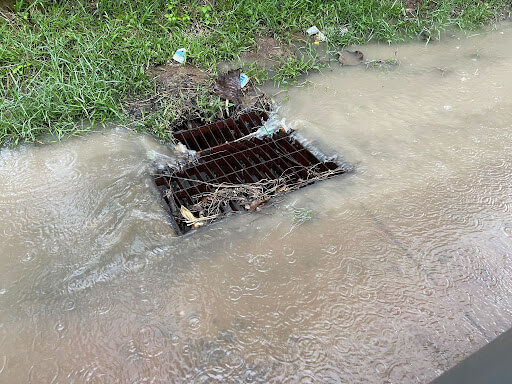
Why Is the Concrete Around My Storm Drain Sinking? Understanding Washout, Voids, and Drainage Failures
Concrete sinking around a storm drain is more than an uneven pavement problem. It can be an early indication that the soil supporting the surrounding concrete or asphalt has changed, sometimes because water is moving through areas where it was never intended to travel.For commercial property managers, municipal public works departments, homeowners associations, and industrial facility operators throughout Houston and Southeast Texas, storm drain settlement can create recurring maintenance problems. A depression forms around a catch basin, cracks develop in the surrounding pavement, or a section of concrete begins sloping toward the drain. The area gets patched, but several months later, the same problem returns.
While surface deterioration and poorly compacted backfill can contribute to these conditions, underground soil loss is another possibility that deserves attention. When water escapes through defective stormwater infrastructure or travels along poorly protected drainage pathways, it can carry fine soil particles away from the surrounding material. Over time, that process can create hidden voids, reduce pavement support, and contribute to settlement. Understanding why concrete is sinking around a storm drain is the first step toward determining whether the right solution involves drainage repair, concrete replacement, void filling, soil stabilization, or a combination of corrective measures.
Why Does Concrete Sink Around a Storm Drain?
Storm drains are installed in locations where water naturally collects. Parking lots, roadways, industrial facilities, shopping centers, and other developed properties are designed to direct stormwater toward catch basins and drainage structures. That makes the area surrounding a storm drain particularly vulnerable to changes in moisture and soil conditions.
When water enters the drainage system as intended, it travels through the catch basin and connected pipes toward an approved discharge location. Problems can develop when water escapes through damaged joints, deteriorated connections, cracked structures, or other defects. Escaping water begins carrying fine soil particles away, and the material surrounding the drain loses volume and support. The pavement above may remain relatively stable at first, but continued movement can eventually produce cracking, settlement, or a visible depression.
Not every sunken drain indicates an underground leak. Poor backfill compaction, pavement deterioration, construction deficiencies, and changes in loading can produce similar symptoms. Determining which condition is responsible is essential before choosing a repair method.
What Is a Catch Basin, and Why Does It Matter?
A catch basin is a drainage structure designed to collect stormwater from the surface and direct it into an underground stormwater system. Most catch basins include a grate or inlet opening, a collection structure, and an outlet connection to a storm drain pipe. Some catch basins also contain a sump intended to capture a portion of the sediment and debris carried by runoff. Because catch basins are often surrounded by pavement, they must integrate with the supporting materials beneath roadways, parking lots, sidewalks, and other surfaces. The structure itself may be concrete, precast concrete, masonry, or another approved material. Regardless of its construction, the surrounding soil and backfill play an important role in maintaining pavement stability. When that material is disturbed, poorly compacted, or washed away, the surrounding concrete may begin to move independently of the catch basin. This can create an uneven transition between the drain structure and the adjacent pavement, even when the drainage system continues collecting water.
How Water Escaping a Storm Drain Can Wash Away Soil
Water moving through soil can transport fine particles when hydraulic conditions are sufficient. This process is one of the mechanisms that can contribute to underground erosion and void formation. Consider a catch basin with a damaged outlet connection. During a heavy rainstorm, water enters the basin and flows toward the connected pipe. If part of that water escapes through an opening, it may enter the surrounding backfill rather than remaining inside the drainage system. Depending on the soil composition and available drainage pathways, the escaping water can carry particles away from the area surrounding the structure.
Repeated storm events may gradually enlarge the affected zone. Small gaps can develop within the supporting material, and nearby soil may shift into those spaces. Eventually, the pavement above may begin settling as its support changes. This type of soil migration can occur around catch basins, storm drain pipes, pipe joints, utility trenches, and other drainage structures. However, the presence of a drainage defect does not automatically establish that erosion is occurring. Site conditions and evidence of material loss must be evaluated.
Why Houston’s Heavy Rainfall Makes Storm Drain Settlement Important
Houston and Southeast Texas experience periods of intense rainfall that can place substantial demands on stormwater infrastructure. During major storms, runoff from rooftops, parking lots, roadways, and other impervious surfaces can concentrate quickly at drainage inlets. Catch basins may receive large volumes of water over relatively short periods, particularly in heavily developed commercial areas. These conditions can expose weaknesses in underground drainage systems. Defective connections, damaged structures, and poorly protected backfill may experience repeated water movement during storm events.
Water can also enter surrounding soil from the surface through pavement cracks, open joints, and poorly sealed transitions around drainage structures. When the soil becomes saturated, its behavior can change. Some materials lose strength when wet, while fine-grained soils may be susceptible to migration under particular flow conditions. The result is that settlement around a storm drain may become more noticeable after heavy rainfall, even when the underlying problem has been developing for a considerable period.
Poorly Compacted Backfill Can Cause Settlement Without a Leak
Storm drain installation typically requires excavation, placement of the drainage structure, connection of underground piping, and replacement of the surrounding soil or engineered fill. The quality of that backfill installation matters. If material is placed in lifts that are too thick, contains unsuitable soil, or is not compacted adequately, it may continue consolidating after construction is complete. As the backfill becomes denser, its volume decreases, allowing the pavement above to settle. This can create a depression around an otherwise functioning catch basin.
The distinction between settlement caused by poor compaction and settlement caused by active erosion is important because the appropriate repairs may differ. Compaction-related settlement may require reconstruction or stabilization of the affected support material. Active soil migration, however, also requires attention to the water pathway that is removing material. A surface patch alone may not adequately address either condition.
Why the Pavement Often Sinks Before the Drain Structure
A catch basin and the surrounding pavement do not always respond to soil movement in the same way. The catch basin may extend deeper into the ground and receive support from materials below the pavement base. The adjacent concrete or asphalt depends on a shallower supporting system. If the backfill surrounding the catch basin settles, the pavement may move downward while the inlet structure remains closer to its original elevation. This creates a familiar condition in parking lots and roadways: the drain grate appears raised relative to the surrounding pavement, or the pavement slopes sharply toward the catch basin. In other cases, the catch basin itself may settle or shift because its supporting material has become compromised. These different movement patterns can provide useful clues, but they do not replace a proper evaluation of the structure and surrounding ground.
What Are the Warning Signs of Soil Washout Around a Storm Drain?
The most obvious warning sign is a depression forming around the drainage structure. However, several other symptoms can indicate that support conditions may be changing. Property owners and maintenance personnel may notice cracks radiating away from the catch basin, separation between the drain frame and surrounding concrete, recurring potholes, gaps beneath pavement edges, or an area that continues sinking after previous repairs.
Loose or missing material around the inlet can also deserve attention, especially when it reappears after storms. Another clue is a change in drainage behavior. A low area may begin collecting water outside the catch basin, or runoff may start entering pavement cracks rather than flowing directly through the intended inlet.
Some settlement problems progress gradually, while others become apparent after a major storm. Tracking when symptoms appear and how quickly they change can help determine whether the problem warrants additional investigation.
Can a Storm Drain Cause a Sinkhole?
Defective underground drainage infrastructure can contribute to localized ground collapse when soil is transported away and the remaining material loses support. In everyday conversation, these collapses are sometimes called sinkholes. Technically, however, a collapse caused by underground soil erosion near a drainage structure is not necessarily the same geological process as a natural sinkhole associated with dissolution of subsurface rock. For property owners, the immediate concern is the potential hazard.
A sudden depression, rapidly enlarging hole, or pavement surface that appears unsupported should be treated seriously. Vehicle traffic, pedestrians, and equipment may need to be kept away until qualified personnel evaluate the affected area. Simply filling the visible opening without identifying the underground conditions can leave an unsafe situation unresolved.
Why Parking Lots Are Especially Vulnerable
Commercial parking lots often contain multiple catch basins connected through underground stormwater piping. These systems collect runoff from large paved areas and may experience substantial flow during intense rainfall. They also operate beneath surfaces exposed to repeated vehicle loading.
When support is lost around a catch basin, the pavement may begin responding to both the underground void and the traffic moving across it. Heavy delivery vehicles, garbage trucks, service vehicles, and other commercial traffic can increase stresses in areas where support has already been compromised.
Settlement near a drainage inlet can also create new low spots that trap water, accelerate surface deterioration, or direct additional runoff toward cracks. For commercial property managers, this creates a maintenance issue that may affect vehicle movement, pedestrian safety, drainage performance, and the appearance of the property.
Storm Drain Settlement at Industrial Facilities
Industrial properties introduce additional considerations because pavement and concrete may support heavier equipment and more concentrated loads. Truck routes, loading areas, equipment access roads, storage yards, and industrial parking surfaces often include drainage structures. If a void develops beneath a concrete slab or roadway near a storm drain, the loss of support can increase risk of settlement. The operational impact can extend beyond the affected drain. Uneven pavement may interfere with material handling, vehicle access, loading operations, or maintenance activities. Industrial facilities frequently operate on tight schedules. Therefore, targeted stabilization methods may be attractive and can reduce the need for extensive demolition.
How Storm Drain Settlement Affects Municipal Roads
Municipal roadways contain stormwater infrastructure that must function reliably while supporting continuous vehicle traffic. Settlement around a catch basin can create rough pavement transitions, recurring potholes, cracking, and drainage problems. If the surrounding material continues deteriorating, repeated surface repairs may become necessary. Municipal maintenance departments may initially address the visible pavement condition, particularly when it creates an immediate traffic concern. However, recurring settlement at the same inlet can indicate that the underlying support conditions deserve closer examination.
A longer-term repair strategy may require evaluating the catch basin, pipe connections, trench backfill, pavement structure, and surrounding soil. The goal is to identify whether the problem is limited to pavement deterioration or involves deeper loss of support.
Why Repeated Asphalt or Concrete Patching May Fail
A patch restores the surface, but it does not automatically replace missing support beneath the pavement. If the area surrounding a catch basin contains a hidden void, additional asphalt or concrete may temporarily improve the surface. While necessary, this also may leave the unsupported material below in need of further repair.
If water continues escaping from a damaged storm drain connection, the same erosion may continue after the patch is completed. Over time, the repaired area may settle again. This does not mean patching is always inappropriate. Surface repairs can be effective when the underlying support is sound and damage is limited to the pavement. The problem arises when repeated surface repairs are used to address a condition that originates below the pavement.
How Do You Determine Whether a Void Exists?
A visible depression does not reveal the full condition of the ground underneath it. Depending on the circumstances, evaluation may include inspection of the catch basin and connected pipes and review of drainage patterns. It may also examine surrounding pavement, and assess the supporting soil. Drainage contractors may use cameras to inspect underground piping and identify damaged joints, cracks, or other defects. Engineers or geotechnical professionals may recommend additional investigation if there’s evidence of significant settlement, voids, or structural concerns. The appropriate methods depend on the site, accessibility, severity of movement, and type of infrastructure. A reliable repair plan should be based on the conditions identified rather than assuming every sunken drain has the same cause.
How Polyurethane Injection Can Help Fill Voids Around Storm Drains
When an investigation identifies an appropriate underground void or loss of support, polyurethane injection may provide a targeted stabilization option. PolyTex Concrete uses specialized polyurethane materials that can be introduced into compromised areas through carefully selected injection points. As the material reacts and expands, it can fill available void space and help restore support beneath concrete or within affected soil and backfill zones.
In some projects, the objective may be to stabilize material beneath a settled pavement section. In others, the concrete may remain relatively level while a void exists underneath. This scenario makes support restoration the primary goal.
Polyurethane injection can also be used to carefully lift suitable settled concrete when the conditions allow. However, work around catch basins and underground pipes require careful planning. Injection pressures, material placement, access locations, and the condition of nearby structures are important factors. They must be considered to avoid damaging drainage components or allowing material to enter the drainage system.
Polyurethane Does Not Replace a Failed Storm Drain
This is an important distinction for municipalities and property owners. If a catch basin is structurally damaged, a storm drain pipe has collapsed, or a joint continues allowing significant water to escape, the drainage system itself may require repair or replacement. Polyurethane void filling can restore support in appropriate conditions, but it is not automatically a substitute for repairing defective drainage infrastructure.
In many situations, correcting the source of water loss should be part of the repair strategy before or in coordination with soil stabilization. That may require a drainage contractor, civil engineer, municipal utility crew, or other qualified professional. PolyTex’s role is to address appropriate voids, compromised support, and concrete settlement, not to suggest that every drainage problem can be solved through injection alone.
When Concrete Leveling May Be Better Than Replacement
If the surrounding concrete remains structurally serviceable but has settled because of lost support, polyurethane leveling may offer the solution. It may be a great alternative to removing and replacing the entire section. Targeted injection can sometimes restore support and lift the affected slab with relatively limited surface disruption. This may be especially valuable around active parking lots, commercial entrances, industrial facilities, and municipal areas. It’s value is in the avoidance of removing concrete which may interrupt operations. However, severely cracked, deteriorated, or structurally compromised pavement may not be a good candidate for leveling. The decision should consider the concrete condition, support material, the drainage structure, and whether the cause of settlement has been addressed.
What About Asphalt Around a Catch Basin?
Asphalt and concrete respond differently to loading and loss of support. Asphalt is a flexible pavement material that may deform, crack, or develop depressions as the underlying base changes. Concrete is more rigid and may bridge unsupported areas before cracking or settling.
Polyurethane stabilization may be appropriate beneath certain asphalt pavement systems, but the repair approach is not identical to lifting a concrete slab. A severely deteriorated asphalt surface may still require replacement after the underlying support conditions are corrected. The important principle remains that restoring the pavement surface without addressing unstable support may leave the problem unresolved.
Preventing Recurring Storm Drain Settlement
Preventing repeated settlement begins with understanding the cause. For some properties, the solution may involve repairing damaged drainage connections or replacing deteriorated catch basin components. Others may require correction of poorly compacted backfill, improved surface drainage, or reconstruction of surrounding pavement. Where hidden voids or localized loss of support have been identified, polyurethane injection may be one component of the stabilization strategy.
Regular inspection can also help property managers and municipal maintenance teams recognize changes before they become extensive. Photographs of recurring low spots and records of previous repairs are helpful. Additionally, observations after major storms, and reports of changing pavement conditions can provide useful information during evaluation.
A recurring problem deserves a cause-based repair plan rather than another temporary surface correction.
Storm Drain Problems Often Begin Below the Surface
When concrete or asphalt begins sinking around a storm drain, the visible depression may be only part of the problem. Water movement, drainage connections, poor backfill, underground erosion, and hidden voids can all influence the stability of surrounding pavement.
For municipalities, commercial property owners, industrial facilities, and HOAs throughout Houston and Southeast Texas, identifying those conditions is important. This simple step can help prevent repeated repairs and support more informed maintenance decisions.
PolyTex Concrete provides polyurethane void filling, concrete leveling, and soil stabilization for commercial, municipal, and infrastructure applications throughout Houston, Conroe, The Woodlands, Galveston, and surrounding communities.
If pavement continues settling around a catch basin or storm drain, the next repair should begin with a better understanding of what is happening underground. The pavement shows where the problem is appearing. The supporting soil helps explain why.
Contact PolyTex Concrete to discuss your storm drain settlement or infrastructure stabilization project.